

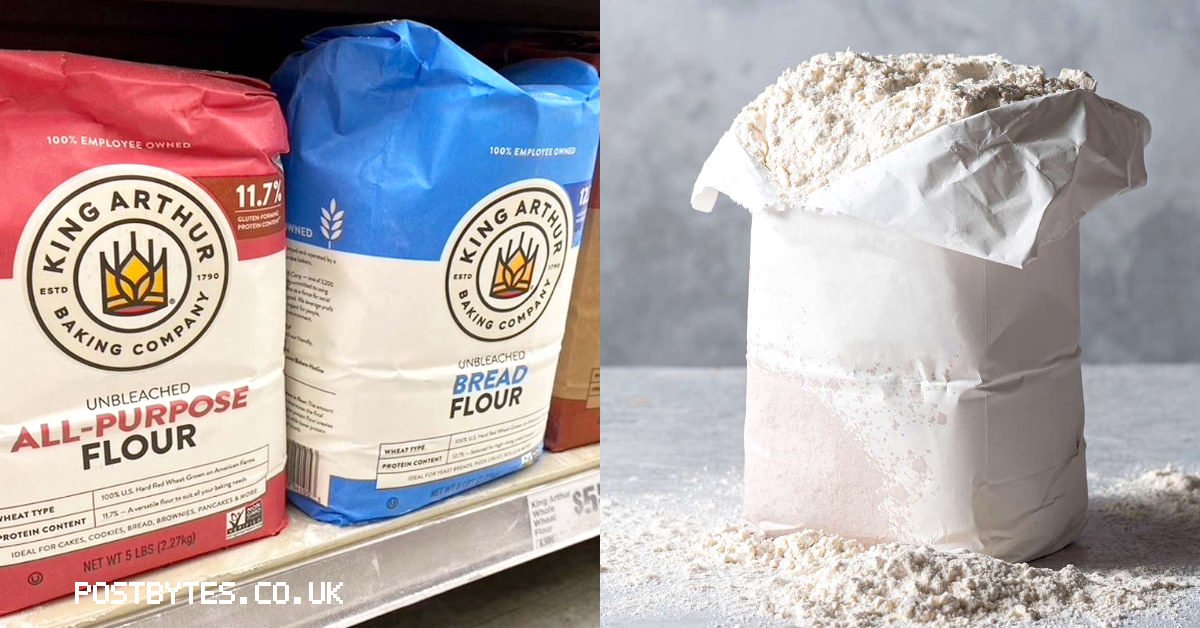
Most people assume all purpose flour is just “regular flour,” but that label hides a surprisingly specific product. In fact, it’s a precisely milled blend of hard and soft wheats, designed to sit in the middle of the flour spectrum. You’ll find it in nearly every American pantry, yet few cooks know what actually goes into it or when to reach for something else.
What You Can Do With All Purpose Flour Right Now
If you’re staring at a bag of all purpose flour, the first thing to know is that it’s the most versatile option you can buy. It handles cookies, cakes, pancakes, and even pizza dough without complaint. The trade-off is that it won’t excel at any single job the way specialized flours do.
For chewy bread, you’d want bread flour with its higher protein content. For delicate pastries, cake flour gives a softer crumb. All purpose sits between them, which makes it the default choice for recipes that don’t specify otherwise. You may also want to check US Workplace Safety Laws in 1900: Status and Reforms for a different perspective on similar ground
One practical tip: when a recipe calls for all purpose flour, don’t swap in bread flour unless you’re prepared for a denser result. The extra protein forms more gluten, which can toughen cakes and muffins. Conversely, using cake flour in bread will produce a loaf that lacks structure and may collapse.
Measuring matters more than you think. Spoon the flour into your measuring cup and level it off with a knife. Scooping directly from the bag packs in extra flour, and that can throw off the liquid-to-flour ratio by a noticeable margin.
How All Purpose Flour Came to Dominate American Kitchens
The story of all purpose flour begins in the late 19th century, when millers started blending different wheat varieties to create a consistent product. Before that, home bakers had to adjust their recipes based on whatever local wheat was available, which made results unpredictable.
By the 1930s, commercial mills had standardized the blend, and the name “all purpose” stuck. The idea was simple: one bag that could handle most baking tasks, from biscuits to pie crusts. It caught on quickly because it simplified shopping and recipe writing.
Today, most all purpose flour in the United States comes from a mix of hard red winter wheat and soft red winter wheat. The exact ratio varies by brand, which is why some flours behave differently in the same recipe. King Arthur Flour, for example, uses a higher protein content than many generic store brands.
That variation matters. A flour with 11% protein will produce slightly chewier results than one with 9.5%. If you switch brands and notice your baked goods changing texture, the protein level is likely the culprit.
Key Milestones in the History of All Purpose Flour
One of the earliest milestones came in 1790, when Oliver Evans invented the automated flour mill in Delaware. His system reduced labor and made flour production more consistent, though it wasn’t yet the all purpose blend we know. A reference profile of the subject is maintained on Plain Flour vs All-Purpose Flour: What's the Difference?
Fast forward to 1921, when the first self-rising flour hit the market. That product combined all purpose flour with baking powder and salt, saving home cooks a step. It never replaced plain all purpose flour, but it showed how the market was evolving.
Another turning point was the 1940s, when enrichment became standard. Milling removed natural vitamins, so manufacturers began adding back iron and B vitamins. That practice continues today, which is why most all purpose flour is labeled “enriched.”
More recently, the rise of artisan baking in the 2000s pushed some brands to offer higher-protein versions. These are marketed as “bread flour” or “high-gluten flour,” but they’re essentially all purpose flour with a protein boost. The original product remains the baseline.
The Financial and Regulatory Side of All Purpose Flour
All purpose flour is cheap, and that’s partly by design. The U.S. Department of Agriculture sets grading standards for wheat, and millers compete on price. A five-pound bag typically costs a few dollars, making it one of the most affordable staples in the grocery store.
Regulation also plays a role in what you can call “all purpose flour.” The Food and Drug Administration requires that enriched flour contain specific amounts of thiamin, riboflavin, niacin, folic acid, and iron. If a product doesn’t meet those standards, it can’t be labeled as enriched.
There’s also a legal distinction between bleached and unbleached flour. Bleaching uses chemicals like benzoyl peroxide to speed up aging, while unbleached flour ages naturally. Both are safe, but some bakers prefer unbleached for its slightly denser texture.
One financial angle worth noting: the price of wheat futures can swing dramatically, which affects flour costs. When wheat harvests are poor, flour prices rise, and that can ripple through the entire food industry. For home bakers, the impact is usually small, but it’s a reminder that even a humble bag of flour is tied to global markets.
Frequently Asked Questions
What is all purpose flour best known for?
All purpose flour is best known for its versatility in baking and cooking. It works for cookies, cakes, breads, and thickening sauces. Its moderate protein content makes it a reliable middle ground, though it won’t produce the same results as specialty flours in extreme cases.
How does all purpose flour differ from bread flour?
Bread flour has a higher protein content, typically 12-14%, compared to all purpose’s 9-12%. That extra protein creates more gluten, giving bread a chewier texture. All purpose flour produces softer baked goods, which is why it’s preferred for cakes and pastries.
Where is all purpose flour most commonly used?
All purpose flour is most commonly used in American home kitchens, where it’s the default for most baking recipes. It’s also widely used in restaurants for thickening sauces and making roux. Its availability and low cost make it a staple in many countries, though other regions often prefer different flour types.
How can I substitute all purpose flour in a recipe?
You can substitute all purpose flour with a mix of bread and cake flour, but the ratio depends on the desired texture. For a general swap, use half bread flour and half cake flour. Alternatively, you can use whole wheat flour, but expect a denser, nuttier result.
Why did all purpose flour become so popular?
All purpose flour became popular because it simplified baking. Before its invention, cooks had to adjust recipes based on local wheat varieties. The standardized blend allowed recipes to be written once and work everywhere, which helped it spread across the United States and beyond.
