

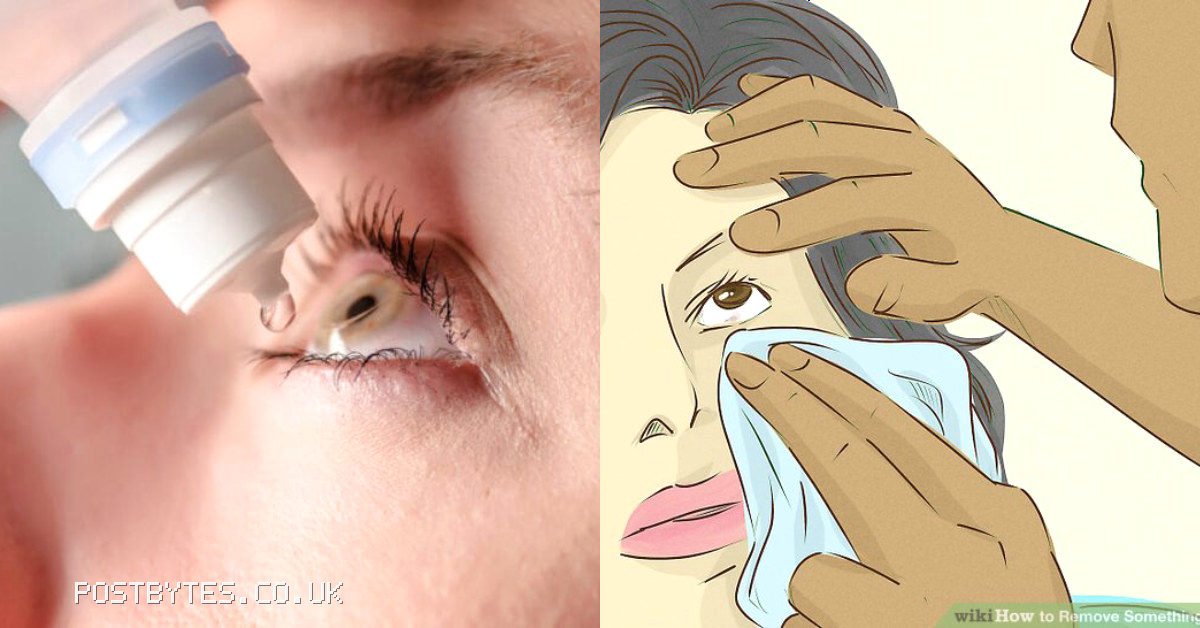
You’re reading this because something is stuck in your eye, and it’s driving you crazy. That gritty, scratching sensation is your eye’s way of saying it wants the intruder gone. The good news is that most particles—like dust, sand, or a stray eyelash—can be safely removed at home with a few simple steps.
What Tools and Solutions Eye Doctors Recommend for Flushing
Ophthalmologists and emergency room staff rely on a few basic tools to dislodge a foreign body. The most effective is sterile saline solution, which you can buy at any pharmacy. If you don’t have that, clean lukewarm tap water works in a pinch. The key is to tilt your head so the water flows from the inner corner of your eye toward the outer corner, carrying the particle away with it.
For a particle trapped under the lower lid, gently pull the lower lid down and look upward while flushing. This opens the pocket where debris often hides. For the upper lid, a clever trick is to pull the upper lid over the lower lashes—this can brush the particle out as the lids slide against each other.
You might be tempted to use tweezers or a cotton swab. Don’t. Those tools can scratch the cornea or push the particle deeper into the tissue. If flushing doesn’t work, the safest move is to see an eye doctor who has specialized instruments like a slit lamp and sterile picks.
Common Myths About Removing Eye Particles, Debunked
One widespread myth is that rubbing your eye will help dislodge the particle. In reality, rubbing can scratch the cornea or embed the particle further. Another misconception is that you should use a cotton swab to wipe the eye’s surface—this can leave fibers behind and cause more irritation. Readers exploring how to get something out of your eye will also find useful context in How to Get Rid of a Cold Sore in 24 Hours: What Actually Works
Some people believe that if you can’t see the particle, it must have fallen out. That’s not always true; a tiny speck can hide under the lid or in the corner. The sensation may persist even after the particle is gone, due to a minor scratch on the cornea. This is why a persistent scratching feeling warrants a doctor’s visit.
The weaker claim here is that home remedies like using a spoon or a credit card to scrape the eye are safe. They are not. Only a professional should ever touch the eyeball with a tool.
How Eye Safety Practices Vary Across Regions and Age Groups
Eye injuries from foreign bodies are more common in certain settings. Construction workers, gardeners, and DIY enthusiasts face higher risks due to dust, wood chips, and metal shavings. In many countries, workplace safety regulations require protective eyewear in such environments, but compliance varies. 6 Tips to Get Something Out of Your Eye Safely – GoodRx keeps a longer factual record of the subject for those who want more
Children are another group prone to getting sand or dirt in their eyes, especially at playgrounds or beaches. Parents often panic, but the same flushing technique works for kids—just ensure they tilt their head properly. Older adults may have reduced tear production, making it harder for the eye to naturally wash out particles, so they might need more frequent flushing.
In regions with dusty climates or high pollen counts, eye irritation is more frequent. Some people turn to over-the-counter eye drops for relief, but these are not a substitute for removing the actual particle.
What Eye Care Experts Say About When to Seek Immediate Help
Dr. Emily Chen, an ophthalmologist at a major teaching hospital, emphasizes that the most critical rule is: never attempt to remove an object that is embedded in or has penetrated the eyeball. In such cases, do not touch it—cover the eye with a protective shield (like a paper cup) and go to the emergency room immediately.
Chemical splashes, such as from cleaning products, require immediate and continuous flushing with water for at least 15 minutes, then urgent medical evaluation. The same applies if you experience severe pain, blurred vision, or persistent redness after flushing.
Another expert point: if you wear contact lenses, remove them before flushing, as the lens can trap the particle against the eye. After removal, do not reinsert the lens until the eye feels completely normal.
According to some sources, a single visit to an eye doctor for a foreign body removal is often quick and painless, but delaying can lead to corneal abrasions or infections. The more useful approach is to err on the side of caution.
Frequently Asked Questions
What is a good alternative to sterile saline for flushing my eye?
Clean lukewarm tap water is the most accessible alternative. You can also use a gentle stream from a clean cup or a water bottle. Avoid using water that is too cold or too hot, as extreme temperatures can shock the eye.
Who is most at risk for getting something stuck in their eye?
People who work in dusty or industrial environments, such as construction workers, mechanics, and gardeners, are at higher risk. Children playing in sand or dirt are also common cases. Additionally, contact lens wearers may experience more frequent irritation if they don’t handle lenses hygienically.
When did the recommendation to flush eyes with water become standard?
The practice of flushing eyes with water for chemical exposures has been standard in occupational safety for decades, with guidelines from organizations like OSHA. For simple foreign bodies, the recommendation has been consistent in first aid manuals for many years, though the specific technique of tilting the head has been refined over time.
Is it still safe to use the eyelid-over-eyelid trick for upper lid particles?
Yes, this technique remains a safe and effective first step for dislodging a particle under the upper lid. It works by using the lower lashes to brush the particle out. However, if the particle is sharp or embedded, do not attempt this—seek professional help.
Who is the best person to see if I can’t get the particle out myself?
An ophthalmologist is the best choice, as they have specialized tools and training. If you can’t see one immediately, an optometrist or an emergency room doctor can also help. Avoid trying to remove it yourself with any tools.
