

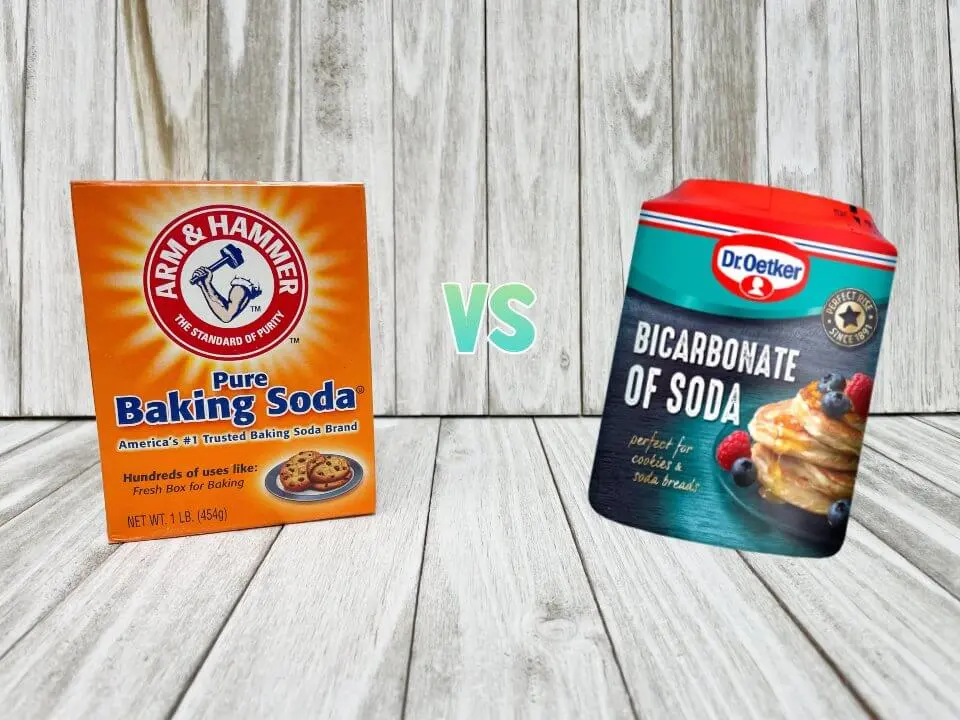
Standing in the baking aisle, you might notice two boxes that look almost identical. One says “bicarbonate of soda,” the other “baking soda.” They are, in fact, the same white powder. Both are sodium bicarbonate, with the chemical formula NaHCO3. This article explains the naming, the history, and how to use them correctly. A companion read that pairs well with this one is US Workplace Safety Laws in 1900: Status and Reforms
What Food Scientists Say About the Two Names
Food chemists are unambiguous on this point. “Bicarbonate of soda” and “baking soda” are two labels for one compound, sodium bicarbonate. There is no compositional difference between them. The distinction is purely regional: “bicarbonate of soda” is the traditional term in Britain and the Commonwealth, while “baking soda” is the standard American name.
Modern packaging often acknowledges this. In many countries, labels list “bicarbonate of soda (also known as baking soda)” to avoid confusion. The chemical formula NaHCO3 appears on both, confirming their identity. When you see that formula, you know exactly what you are holding.
One point of confusion arises with “soda crystals.” That is sodium carbonate, a different and stronger alkaline compound. It is not a substitute in recipes. Always check the label for “sodium bicarbonate” to be certain.
How to Substitute and Store Baking Soda in Your Kitchen
If a recipe calls for bicarbonate of soda and you have baking soda, use them in equal amounts. The swap is one-to-one because they are the same substance. This works for cakes, cookies, and quick breads alike.
As a leavening agent, sodium bicarbonate releases carbon dioxide when it meets an acid. Buttermilk, lemon juice, or vinegar all trigger this reaction. The gas forms bubbles that make batters rise. Without an acid, the powder leaves a bitter, soapy taste.
Store it in a cool, dry place, sealed tightly. Moisture or humidity can start the reaction prematurely. To test if it is still active, drop a spoonful into vinegar. If it fizzes vigorously, it is good to use. If not, replace it. For a broader factual overview, Is Bicarbonate of Soda the Same Thing as Baking Soda? lays out the key context
One caution: do not confuse baking soda with baking powder. Baking powder already contains an acid, so it works without additional acidic ingredients. Substituting one for the other changes the chemistry of your bake.
What the 1846 Discovery Teaches Us About Branding
The story of these two names begins in 1846. Two New York bakers, John Dwight and Austin Church, first synthesized sodium bicarbonate commercially. Their product was a hit, but the name varied by region. Church’s company, Arm & Hammer, began selling it as “baking soda” in 1867, cementing the American term.
This branding lesson is simple: the same product can thrive under different names. Arm & Hammer built a household name around one label, while British shoppers kept calling it bicarbonate of soda. The chemistry never changed, only the marketing.
The weaker claim here is that one name is more correct than the other. Both are accurate. The stronger approach is to recognize the regional context and use whichever term your audience understands.
Why the Name Matters for British and American Readers
For readers in the UK, Australia, and other Commonwealth countries, “bicarbonate of soda” is the familiar term. Americans reach for “baking soda.” This regional divide causes real confusion when following international recipes. A British cook reading an American blog might wonder if they need a different product.
Online searches in 2023 frequently asked whether the two were different. Food science confirms they are identical, but the question persists. The answer matters for everyday cooking and for understanding product labels.
Beyond baking, the substance has many uses. It works as a cleaning agent, a deodorizer, and an antacid. These applications do not depend on the name. Whether you call it bicarbonate of soda or baking soda, the powder in the box is the same.
| Name | Chemical Identity | Common Use |
|---|---|---|
| Bicarbonate of soda | Sodium bicarbonate (NaHCO3) | Leavening, cleaning |
| Baking soda | Sodium bicarbonate (NaHCO3) | Leavening, deodorizing |
| Baking powder | Sodium bicarbonate + acid | Leavening without extra acid |
| Soda crystals | Sodium carbonate (Na2CO3) | Laundry, heavy cleaning |
Frequently Asked Questions
How can I tell if my baking soda is still active?
Place a small amount in a bowl and add vinegar or lemon juice. If it bubbles vigorously, it is still effective. A weak or absent reaction means it has lost its potency and should be replaced.
Why did the name “baking soda” become popular in the United States?
Arm & Hammer, founded by Austin Church, marketed the product under that name starting in 1867. The brand’s success helped cement “baking soda” as the standard American term, while British usage retained “bicarbonate of soda.”
How much baking soda should I use to replace baking powder?
You cannot substitute directly without adjusting the recipe. Baking soda is about three times stronger than baking powder. For each teaspoon of baking powder, use about a quarter teaspoon of baking soda plus an acid like buttermilk or vinegar.
Is baking soda still used for cleaning and deodorizing?
Yes, it remains a popular non-toxic cleaner and deodorizer. It can absorb odors in refrigerators, scrub surfaces, and even help remove stains. Its mild abrasiveness and alkaline pH make it versatile for household tasks.
When did the commercial production of sodium bicarbonate begin?
John Dwight and Austin Church began commercial synthesis in 1846. Their product was sold under different names, but the chemical compound was identical to what we use today.
