

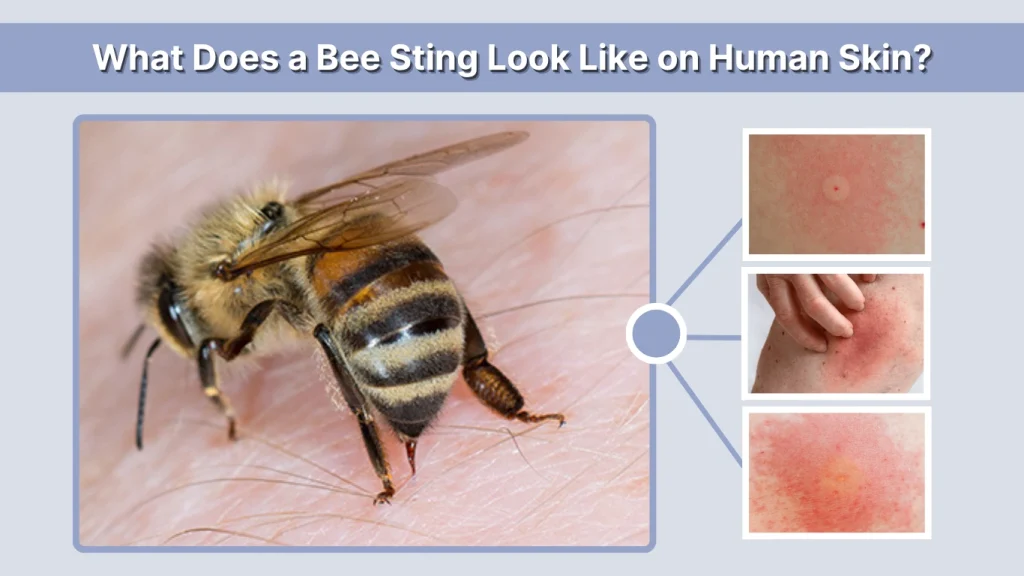
You’re enjoying a picnic when a sharp pain hits your arm. Within minutes, a red bump appears. But what does a bee sting look like exactly? The classic sign is a small red welt with a central white dot where the stinger entered. The area swells, turns red, and feels warm and itchy. Recognizing these features quickly can help you decide if it’s a normal reaction or something more serious. Another piece worth your time is AP Physics 1 Equation Sheet: What It Includes and How to Use It, which touches on a related question. On a related note, US Workplace Safety Laws in 1900: Status and Reforms adds helpful background
How the Sting Site Appears: From Stinger to Swelling
The most telling feature is the stinger itself. A honey bee leaves its barbed stinger embedded in the skin, visible as a tiny black speck. The venom sac may remain attached, appearing as a small white-yellowish sac. Bumblebees and wasps, however, do not leave stingers; their stings look like raised red points without a lodged barb. For a broader factual overview, Bee Sting Pictures – What Does a Bee Sting Look Like? – Prevention lays out the key context
Around the entry point, the skin reacts quickly. Redness and swelling develop within minutes, often spreading to a diameter of under an inch for a normal reaction. The area feels warm to the touch and itches intensely. In some cases, a small blister forms at the site, which can become infected if scratched, leading to pus.
Swelling typically peaks within 48 hours. After that, it gradually subsides over three to seven days. The redness may persist longer, but the pain usually fades within a few hours. If the swelling exceeds four inches, it’s classified as a large local reaction, which may require medical attention.
What a Bee Sting Looks Like: Strengths and Limits of Visual Identification
Visual identification is useful, but it has clear limits. The classic image of a bee sting—a red bump with a central dot—is accurate for honey bees, the most common stinging bee in North America (Apis mellifera). However, other insects cause similar marks. A wasp sting, for instance, looks nearly identical but lacks the stinger. Mosquito bites can also produce red, swollen welts, though they typically don’t have a central puncture point.
The weaker claim here is that you can always tell a bee sting from a photo. In reality, the appearance varies by individual reaction and time elapsed. A sting that’s several hours old may look different from a fresh one. Moreover, in severe allergic reactions, the sting site may be overshadowed by widespread hives elsewhere on the body. So while visual cues help, they’re not definitive.
What’s more reliable is the context. Bee stings occur most often from spring through fall when bees are active outdoors. If you’re near flowers or a hive and feel a sharp pain, a bee is likely the culprit. But if you’re indoors and notice a bite, other insects are more probable.
Behind the Sting: How the Venom and Stinger Work
Understanding the mechanics clarifies why the sting looks the way it does. When a honey bee stings, the barbed stinger pierces the skin and remains lodged, tearing away from the bee’s body. This action also pulls out the venom sac, which continues to pump venom into the wound for several seconds. That’s why guidelines from the American College of Allergy, Asthma & Immunology, updated in 2024, recommend removing the stinger within 30 seconds to minimize venom injection.
The venom itself contains proteins that trigger pain and inflammation. Histamine and other chemicals cause blood vessels to dilate, leading to redness and swelling. The central white dot is the puncture site, often surrounded by a pale area due to local vasoconstriction. This is a normal inflammatory response, not an infection.
For bumblebees and wasps, the stinger is smooth, so it doesn’t lodge. They can sting repeatedly, but each sting leaves a similar red mark. The absence of a stinger doesn’t mean the reaction will be milder; it just changes the visual presentation.
Common Misconceptions About Bee Sting Appearance
Several myths persist about what a bee sting looks like. One is that a bee sting always leaves a stinger. That’s only true for honey bees. Another misconception is that the size of the bump indicates the severity of the allergic reaction. In fact, a large local reaction—swelling over four inches—is not the same as a systemic allergic reaction, which involves symptoms like hives, difficulty breathing, or dizziness.
People also confuse bee stings with spider bites. Both can cause red, swollen, painful areas, but spider bites often develop a distinctive “bull’s-eye” pattern or necrotic tissue, which is rare in bee stings. If you see a central blister that turns dark or ulcerates, it’s more likely a spider bite than a bee sting.
Finally, some believe that a bee sting always itches. While itching is common, the initial sensation is sharp pain. Itching typically develops later as the swelling subsides. If the pain persists or worsens after a day, it may indicate an infection, especially if the area becomes hot, red, and oozes pus.
Frequently Asked Questions
Is it safe to remove a bee stinger with tweezers?
Using tweezers can squeeze more venom into the skin. The safer method is to scrape the stinger out with a flat edge, like a credit card, within 30 seconds. This minimizes venom injection and reduces the severity of the reaction.
When did the recommendation to remove stingers within 30 seconds become standard?
The 30-second guideline was emphasized in the 2024 update from the American College of Allergy, Asthma & Immunology. Earlier guidelines suggested removing the stinger as quickly as possible, but the specific timeframe was highlighted to reduce venom exposure.
How does a bee sting differ from a wasp sting in appearance?
A bee sting often leaves a barbed stinger embedded in the skin, visible as a black dot. A wasp sting does not leave a stinger, so the site appears as a raised red point without a foreign object. Both cause similar redness and swelling, but the presence of a stinger is a key differentiator.
What is a good alternative to visual identification for confirming a bee sting?
If you’re unsure, consider the context and your symptoms. Bee stings typically occur outdoors near flowers or hives. If you experience rapid swelling, hives, or breathing difficulty, seek emergency care—these signs indicate a severe allergic reaction, regardless of the sting’s appearance.
Where is the best place to find reliable images of bee stings for comparison?
For example, Prevention.com has a gallery of bee sting pictures that show various stages and reactions. Always cross-reference with official sources like the CDC or allergy associations for accurate information.
