

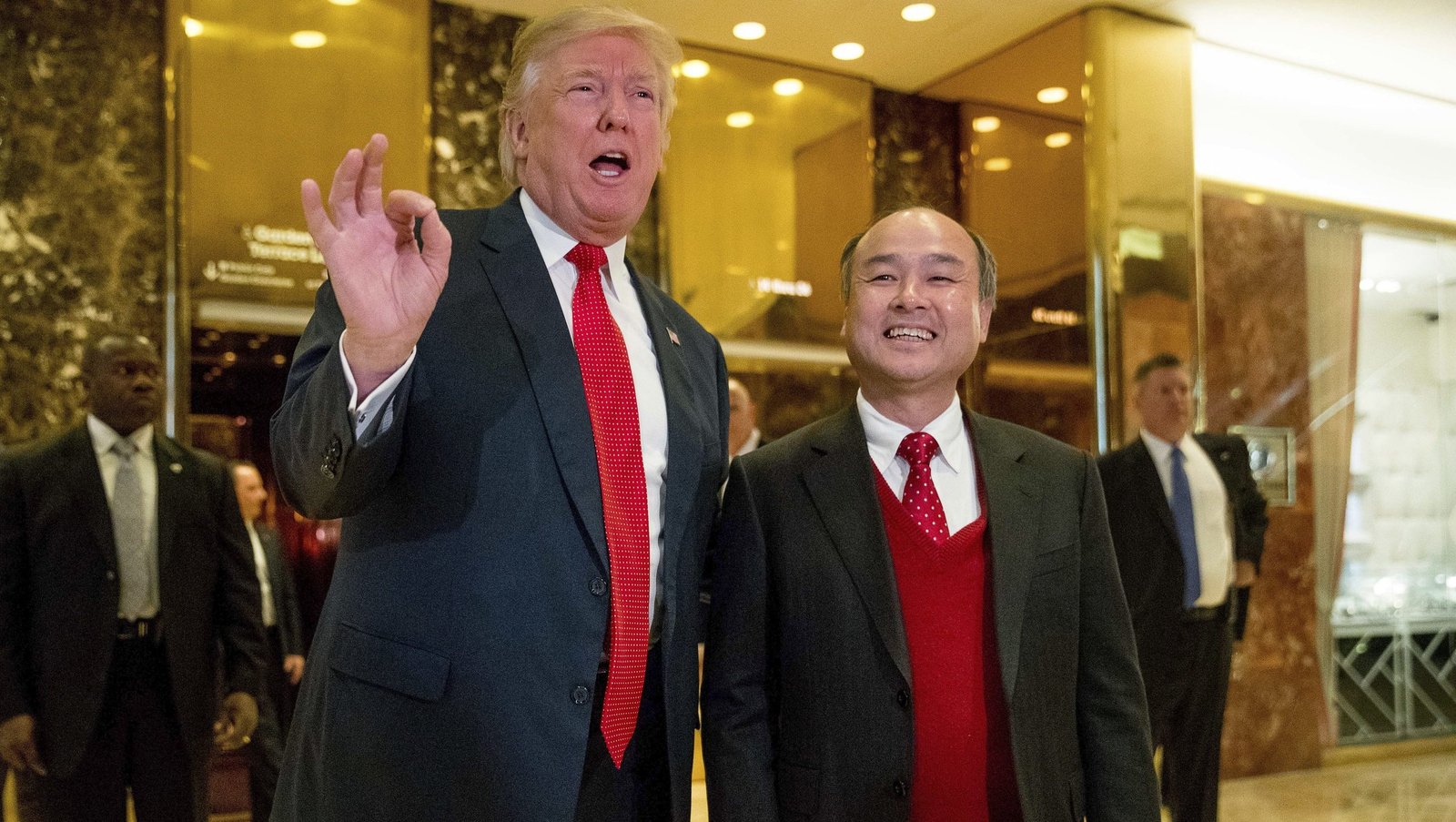
Masayoshi Son and Greg Hayes represent two distinct approaches to leadership in the modern business world. Son is widely associated with ambitious technology investments, entrepreneurial risk-taking, and efforts to identify industries that could transform the global economy. Hayes built his reputation in the aerospace and industrial sectors, where operational discipline, financial management, and long-term customer relationships are essential to business performance.
Although their careers developed in different industries, comparing Masayoshi Son and Greg Hayes offers valuable insight into how executives navigate technological change, capital allocation, competition, and economic uncertainty. One operates primarily at the intersection of investment and emerging technology, while the other is associated with the management of complex industrial businesses.
Their professional experiences also illustrate an important distinction in corporate leadership: creating value through investments in future opportunities is not the same as delivering value through the consistent operation of established businesses. Both approaches can influence economic growth, but they require different skills, risk tolerances, and measures of success.
Understanding their backgrounds, strategic priorities, and leadership philosophies helps explain why these two executives are relevant to discussions about global business and the future of major corporations.
Who Are Masayoshi Son and Greg Hayes?
Masayoshi Son is a Japanese entrepreneur and investor best known as the founder of SoftBank Group. His career has centered on technology, telecommunications, digital platforms, and investments in companies that he believes could benefit from major shifts in the global economy.
Gregory J. Hayes, commonly known as Greg Hayes, is an American business executive known for his leadership at United Technologies Corporation and RTX Corporation, the aerospace and defense company formed through the combination of United Technologies and Raytheon.
Their professional paths reflect different corporate environments. Son has built a business model that relies heavily on identifying promising technologies and allocating capital across a portfolio of companies. Hayes, by contrast, is associated with managing large industrial organizations whose performance depends on engineering expertise, manufacturing capabilities, supply chains, regulatory compliance, and customer demand.
Masayoshi Son’s Background in Technology and Investment
Son founded SoftBank in 1981, initially building a business connected to software distribution before expanding into telecommunications, internet services, and investment activities. Over time, SoftBank became a major participant in the global technology investment landscape.
One of Son’s defining characteristics has been his willingness to make substantial bets on businesses that he believes could become central to the next phase of technological development. His investment philosophy has frequently emphasized long-term technological change rather than simply evaluating a company’s current earnings.
The SoftBank Vision Fund became a prominent expression of this strategy, investing in technology-oriented companies across sectors such as transportation, enterprise software, digital commerce, and artificial intelligence-related businesses.
However, this approach also exposes SoftBank to considerable volatility. When private technology valuations decline, public markets weaken, or portfolio companies struggle to achieve profitability, the financial consequences can be significant.
Son’s career therefore illustrates both the potential rewards of ambitious investment strategies and the difficulties of predicting which emerging technologies will produce sustainable commercial value.
Greg Hayes’s Background in Aerospace and Industrial Management
Greg Hayes developed his executive career in the industrial sector, joining United Technologies in 1982. He later served as the company’s chief financial officer before becoming chief executive officer in 2014.
His leadership coincided with significant changes in the aerospace and defense industries, including major corporate transactions, evolving aircraft demand, manufacturing challenges, and increasing attention to operational efficiency.
United Technologies brought together businesses with substantial engineering and manufacturing capabilities. Its portfolio included aerospace systems, aircraft engines, and other industrial operations before the company’s restructuring and combination with Raytheon created RTX in 2020.
Hayes served as RTX’s chief executive officer until 2024, when Christopher Calio succeeded him. Hayes subsequently remained associated with the company as executive chairman for a period.
His career highlights a different form of executive responsibility: managing large organizations that must deliver reliable products, meet demanding technical requirements, control costs, and maintain customer confidence over long business cycles.
Masayoshi Son and Greg Hayes: Is There a Direct Business Connection?
One important question surrounding these two executives is whether they have a documented professional or personal relationship.
Based on the publicly available corporate information reviewed for this article, there is no established direct business partnership or family relationship between Masayoshi Son and Greg Hayes. Their careers are associated with different companies, industries, and strategic priorities.
SoftBank Group Corp.
+2
Their names can nevertheless be compared meaningfully because both have influenced major organizations operating in technology-intensive industries.
Son’s work involves directing capital toward businesses and technologies that he expects to shape the future. Hayes’ executive career involved overseeing industrial operations, restructuring corporate portfolios, and managing the challenges associated with aerospace and defense manufacturing.
This distinction matters because similar business interests do not necessarily establish a direct relationship between executives. Companies can participate in overlapping markets without their leaders working together, and strategic similarities should not be mistaken for evidence of collaboration.
Why Their Industries May Invite Comparisons
Technology has become increasingly important across both investment management and industrial manufacturing.
Artificial intelligence, advanced computing, semiconductors, automation, and digital infrastructure can influence how businesses operate across numerous sectors. Investment firms may finance the development of these technologies, while industrial companies may incorporate them into products, engineering systems, and manufacturing processes.
SoftBank’s technology investments and RTX’s aerospace and defense activities therefore offer different perspectives on the broader technological transformation of the global economy.
However, this general industry overlap does not demonstrate that Son and Hayes have worked on a shared initiative.
Comparing Their Leadership Styles
Leadership comparisons become more useful when they focus on the responsibilities each executive has actually held rather than assuming that successful business leaders follow the same methods.
1. Vision and Long-Term Investment
Masayoshi Son is known for pursuing opportunities based on expectations about future technological development. His investment philosophy has emphasized the possibility that emerging technologies could create entirely new markets or fundamentally change existing industries.
This approach can produce substantial gains when an investment becomes a major commercial success. It also introduces significant uncertainty because emerging technologies may take longer than expected to generate profits.
For business owners and investors, Son’s career illustrates the importance of balancing a compelling long-term vision with realistic assumptions about valuation, financing, competition, and commercial adoption.
2. Operational Discipline and Financial Management
Greg Hayes operated in an environment where strategic vision needed to be translated into measurable operational results.
Aerospace and defense companies must manage complicated production schedules, engineering requirements, workforce capabilities, supplier relationships, and customer commitments. Their products often require years of development and extensive testing before reaching the market.
In this setting, financial discipline involves more than reducing costs. It also requires allocating resources to critical engineering programs, maintaining product quality, and protecting the company’s ability to fulfill long-term contracts.
Hayes’ experience demonstrates why execution and organizational coordination are essential when leading large industrial businesses.
3. Managing Risk in Different Ways
The risks faced by Son and Hayes differ because their organizations have different business models.
Son’s investment decisions can expose SoftBank to market volatility, changes in technology valuations, financing costs, and uncertainty about whether portfolio companies will become profitable.
An industrial executive such as Hayes faces other challenges, including production disruptions, engineering difficulties, regulatory requirements, and fluctuations in commercial and government demand.
Neither environment eliminates risk. Instead, each requires a different framework for identifying problems and responding to changing conditions.
Investors may focus on portfolio concentration, liquidity, and valuation assumptions. Industrial managers may pay closer attention to production reliability, contractual obligations, safety, and supply-chain resilience.
SoftBank and RTX: Two Different Corporate Models
Understanding the companies associated with these executives provides additional context for their professional backgrounds.How Their Business Models Differ
SoftBank’s investment-oriented model depends partly on the performance and valuations of companies in its portfolio. A successful investment can appreciate substantially, while a struggling portfolio company can reduce returns or require additional financial support.
RTX’s operating model depends on developing, manufacturing, delivering, and supporting products for commercial aerospace and defense customers. Its performance is influenced by factors such as production efficiency, research and development, program execution, and customer demand.
The difference is significant when evaluating corporate performance. Investment businesses may experience sharp changes in reported asset values, while industrial manufacturers must also manage the practical demands of producing complex equipment and supporting it throughout its service life.
Both models require effective capital allocation, but their financial results are shaped by different drivers.
What Business Professionals Can Learn From Their Careers
The careers of Son and Hayes offer several practical lessons for entrepreneurs, executives, and investors.
Combine Ambition With Evidence
A strong business vision can help an organization identify opportunities that competitors overlook. However, ambition alone cannot guarantee success.
Leaders should evaluate market demand, competitive advantages, available financing, and the resources needed to execute a strategy. The larger the investment, the more important it becomes to test assumptions and consider alternative outcomes.
Match Strategy to the Business Model
A strategy that works for an investment holding company may not suit a manufacturing organization.
An investor may accept substantial uncertainty in exchange for the possibility of significant future returns. An industrial operator, by comparison, must ensure that strategic changes do not compromise safety, quality, delivery commitments, or operational stability.
Effective leadership begins with understanding which outcomes matter most to the organization and its stakeholders.
Treat Risk Management as a Continuous Process
Risk management should not be limited to responding to a crisis.
Companies can improve decision-making by monitoring financial exposure, reviewing performance against expectations, maintaining contingency plans, and identifying warning signs early.
For investment businesses, this can involve examining portfolio concentration and financing needs. For industrial companies, it can mean strengthening supplier relationships, improving production planning, and addressing engineering problems before they affect customers.
Measure Results Beyond Headlines
Major acquisitions, large investments, and ambitious announcements often attract public attention. Yet they do not necessarily establish whether a strategy has succeeded.
Long-term performance depends on what happens after a decision is made. Investors need to examine sustainable returns and financial resilience, while operating companies must demonstrate consistent execution and customer value.
This lesson applies equally to technology startups, multinational manufacturers, and established businesses.
The Broader Importance of Technology in Corporate Leadership
One reason comparisons between Son and Hayes remain relevant is that technology increasingly influences decisions across industries.
Artificial intelligence can support research, improve forecasting, automate certain tasks, and help organizations analyze large volumes of information. Advanced computing and semiconductor development also affect the infrastructure required to deploy these systems.
For investment firms, the challenge is identifying which technologies and companies can generate durable economic value. For industrial manufacturers, the challenge is determining where new technologies can improve performance, reliability, productivity, or product capabilities.
These are related questions, but they require different expertise.
An investor might evaluate the commercial prospects of a technology platform. An industrial executive might examine whether a new system can be integrated safely into existing operations and deliver measurable benefits.
The broader lesson is that technological innovation creates opportunities, but successful adoption depends on practical execution, sound economics, and a clear understanding of customer needs.
Frequently Asked Questions
Who are Masayoshi Son and Greg Hayes?
Masayoshi Son is the founder, chairman, and CEO of SoftBank Group, known for technology investments and telecommunications-related businesses. Greg Hayes is a former chief executive of United Technologies and RTX, with a career focused on finance, Masayoshi Son and Greg Hayes corporate strategy, aerospace, and industrial management.
Are Masayoshi Son and Greg Hayes business partners?
There is no established public evidence of a direct business partnership between them. Their professional careers are associated with different companies and distinct areas of business.
Are Masayoshi Son and Greg Hayes related?
No publicly verified information establishes a family relationship between the two executives. Their shared appearance in business discussions is better understood as a comparison of their careers.
What companies are associated with Masayoshi Son?
Son is principally associated with SoftBank Group and its technology investment activities. His career has also involved telecommunications businesses and Arm, the semiconductor technology company.
What companies are associated with Greg Hayes?
Hayes is best known for his executive roles at United Technologies Corporation and RTX Corporation. His leadership career included major corporate restructuring and the formation of the combined aerospace and defense business.
What is the main difference between their leadership approaches?
Son is primarily associated with entrepreneurial investment and long-term technology opportunities. Hayes is associated with financial management, corporate restructuring, and operating large industrial businesses. Their responsibilities required different approaches to capital allocation and risk.
Why are their careers relevant to the future of business?
Both careers illustrate how leaders must make difficult decisions involving technology, investment, organizational change, and uncertainty. Their experiences provide contrasting examples of how businesses can pursue growth while managing financial and operational risks.
Conclusion
Masayoshi Son and Greg Hayes represent two different approaches to leadership in a technology-driven global economy. Son’s career at SoftBank highlights ambitious investment strategies and the pursuit of emerging technologies, while Hayes’ years in aerospace and industrial management demonstrate the importance of operational discipline, financial oversight, and corporate transformation.
There is no established direct business partnership or family relationship between them in the public record reviewed for this article. Their relevance lies instead in the opportunity to compare their professional experiences and the different challenges they faced.
For entrepreneurs, investors, and business professionals, the central lesson is that successful leadership requires more than a bold vision or efficient operations. It requires aligning strategy with the organization’s business model, understanding risk, allocating resources carefully, and measuring results over time.
