

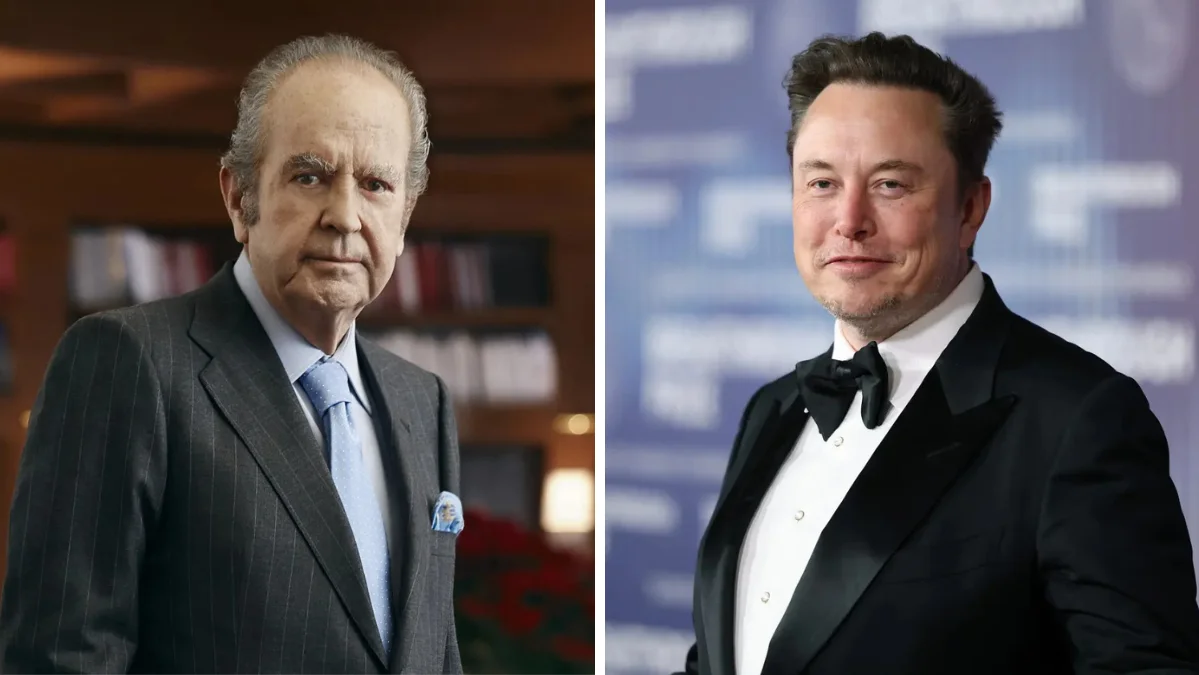
The business world has been shaped by entrepreneurs who recognize opportunities, build successful companies, and influence entire industries. Some create their legacies through traditional industries such as mining, finance, insurance, and retail, while others focus on emerging technologies, transportation, and innovation. Alberto Bailleres and Elon Musk represent two distinctive examples of how business leadership can influence economies and industries across generations.
Although Alberto Bailleres and Elon Musk operated in different periods and business environments, their careers offer interesting perspectives on entrepreneurship, wealth creation, strategic decision-making, and corporate development. Bailleres became one of Mexico’s most influential businessmen through his leadership of a diversified business empire, while Musk gained international recognition through technology-focused ventures, including electric vehicles, space exploration, and artificial intelligence.
Their professional journeys demonstrate that there is no single formula for building a successful business empire. Understanding their backgrounds, achievements, and approaches to leadership provides a broader perspective on the changing nature of global entrepreneurship.
Who Was Alberto Bailleres?
Alberto Bailleres González was a prominent Mexican businessman and billionaire whose career was closely associated with mining, retail, insurance, and financial services. Born in Mexico City in August 1931, he became one of the country’s most influential business figures during the second half of the twentieth century.
He was particularly recognized for developing and expanding Grupo BAL, a diversified conglomerate with interests across several important sectors of the Mexican economy.
Bailleres studied economics at the Instituto Tecnológico Autónomo de México (ITAM), an institution with which he maintained a strong relationship throughout his professional life. His education provided a foundation for understanding financial systems, business operations, and economic development.
Rather than concentrating on a single industry, Bailleres developed a business structure that included companies operating in different markets. This diversification helped establish his reputation as an influential figure in Mexican corporate history.
He passed away on February 2, 2022, at the age of 90. His business legacy continues through the companies associated with Grupo BAL and the leadership of his family.
Understanding Alberto Bailleres’ Business Empire
One of the most important parts of Bailleres’ career was his involvement in building and managing Grupo BAL.
The conglomerate developed interests in multiple industries, creating a diversified business portfolio that extended beyond traditional mining operations.
Industrias Peñoles and the Mining Industry
Mining played a central role in Bailleres’ business career. Through Industrias Peñoles, he became closely associated with Mexico’s mining and metals industries.
The company has been involved in the production of silver, gold, zinc, lead, and other important industrial materials. These resources serve numerous purposes, including manufacturing, construction, electronics, and financial markets.
Bailleres’ association with Peñoles helped strengthen his position in the international mining industry.
Mining also requires a different approach to business management compared with technology companies. It involves long-term investments, infrastructure development, geological exploration, environmental considerations, and complex regulatory requirements.
His career illustrates how strategic ownership and long-term industrial development can establish a lasting position in a competitive global market.
Fresnillo and Precious Metals
Another important company associated with the Bailleres business interests was Fresnillo plc.
Fresnillo became a significant international precious metals producer, particularly known for its silver and gold operations in Mexico.
The company expanded its presence in the mining sector and became publicly listed on the London Stock Exchange in 2008.
Bailleres served as its chairman before stepping down in April 2021. His son, Alejandro Bailleres, subsequently assumed important leadership responsibilities.
Fresnillo demonstrates the international reach of the business interests associated with Grupo BAL.
Retail, Insurance, and Financial Services
Bailleres’ business interests extended well beyond mining.
El Palacio de Hierro became one of Mexico’s best-known luxury department store chains. Its operations helped establish a significant presence in the country’s premium retail market.
Grupo Nacional Provincial, commonly known as GNP Seguros, became another important part of the conglomerate, providing insurance services.
Other associated businesses included Profuturo, which operates in the retirement savings and pension sector, and Valmex, which provides financial and investment-related services.
This diversification allowed the business group to participate in several different areas of the Mexican economy.
Who Is Elon Musk?
Elon Musk is an internationally recognized entrepreneur and business executive associated with several major technology and industrial companies.
Born on June 28, 1971, in Pretoria, South Africa, Musk developed an early interest in computers, engineering, and entrepreneurship.
He later moved to North America, studied at Queen’s University in Canada, and transferred to the University of Pennsylvania, where he studied physics and economics.
His early business career began with technology ventures, including Zip2 and X.com. X.com later became part of the company known as PayPal.
Musk’s involvement in these early businesses provided the financial resources and experience that helped him pursue larger ambitions.
Over time, he became associated with electric vehicles, aerospace engineering, artificial intelligence, and other emerging technologies.
Unlike traditional industrial business leaders, Musk has focused much of his career on companies attempting to transform established industries through technological development.
Elon Musk’s Most Influential Business Ventures
Musk’s entrepreneurial career includes several companies that have attracted significant international attention.
Tesla and the Electric Vehicle Industry
Tesla is one of the most recognizable companies associated with Musk.
He joined Tesla as an investor and chairman in 2004 and became its chief executive officer in 2008.
The company’s development helped bring electric vehicles into mainstream automotive discussions, particularly in the United States.
Tesla expanded its product range to include electric cars, battery storage systems, and solar energy products.
Its business strategy has emphasized technological development, vehicle software, battery performance, manufacturing efficiency, and charging infrastructure.
The company’s influence also encouraged established automotive manufacturers to increase their investment in electric vehicle development.
SpaceX and Commercial Space Exploration
SpaceX represents another major part of Musk’s entrepreneurial ambitions.
Founded in 2002, the company develops rockets, spacecraft, and space transportation services.
One of its major technological achievements has been advancing reusable rocket technology. Traditionally, many rocket components were discarded after launch, creating substantial costs for space missions.
SpaceX developed systems designed to recover and reuse rocket boosters, changing expectations within the commercial space industry.
The company also works with government and commercial customers, including NASA, and operates the Starlink satellite internet network.
Its activities have expanded the role of private companies in space exploration and transportation.
Artificial Intelligence and Emerging Technologies
Artificial intelligence has become another important area of Musk’s business interests.
Through xAI, he has pursued the development of advanced AI systems and related technologies.
He has also been associated with Neuralink, a company developing brain-computer interface technology, and The Boring Company, which focuses on tunneling and transportation infrastructure.
These businesses demonstrate his interest in industries that could experience significant technological changes in the coming decades.
However, ambitious technology projects also involve substantial financial requirements, technical challenges, regulatory considerations, and uncertainty about commercial outcomes.
Alberto Bailleres and Elon Musk: Comparing Their Business Approaches
Although Alberto Bailleres and Elon Musk built their careers in different environments, comparing their professional approaches provides useful insights into two forms of business leadership.
Different Industries, Different Opportunities
Bailleres concentrated much of his business activity on established industries that provide essential products and services.
Mining supplies materials required by manufacturing and infrastructure. Insurance supports financial security, while retail and pension services address important consumer needs.
Musk, meanwhile, became associated with industries undergoing major technological transformation.
Electric vehicles, commercial space transportation, and artificial intelligence require substantial research, engineering capabilities, and investment in new technologies.
The distinction is important because success in these industries depends on different competitive advantages.
Traditional industrial businesses often rely on resource management, operational efficiency, regulatory expertise, and long-term investment planning.
Technology businesses frequently depend on product innovation, research and development, intellectual property, and the ability to scale new solutions.
Leadership and Long-Term Business Development
Bailleres developed a diversified corporate structure that could operate across several industries.
His leadership emphasized the expansion and management of established businesses, creating a network of companies with different revenue sources.
Musk’s approach has been more closely associated with ambitious technological objectives and rapid development.
His companies have pursued projects that challenge existing industry practices, from electric vehicle manufacturing to reusable rockets.
Both approaches require substantial decision-making capabilities, but they reflect different ideas about business growth and long-term opportunities.
Risk Management and Investment
Another important comparison involves the nature of investment risk.
Mining operations require considerable capital for exploration, equipment, transportation, and infrastructure. Projects can take years to develop, and commodity prices can influence profitability.
Technology ventures face different uncertainties. Research projects may not achieve their intended results, consumer demand can change, and competitors can introduce alternative solutions.
Bailleres’ diversified business interests provided exposure to multiple economic sectors.
Musk’s companies, although operating in different industries, are often connected to ambitious technology and manufacturing objectives that require substantial ongoing investment.
Neither approach eliminates risk. Both demonstrate the importance of understanding industry conditions before committing resources.
What Do Their Careers Reveal About Billionaire Wealth?
The careers of Alberto Bailleres and Elon Musk also highlight how wealth can develop through different business models.
Bailleres accumulated substantial wealth through ownership and leadership positions in established companies. His interests included mining, retail, insurance, and financial services.
Musk’s wealth has been closely connected to ownership stakes and equity interests in technology and industrial companies, particularly Tesla and SpaceX.
This distinction is important because billionaire net worth does not necessarily represent cash or immediately available money.
Much of an entrepreneur’s reported wealth can be tied to company shares, ownership interests, and other assets whose values fluctuate with market conditions.
For example, changes in stock prices can significantly affect the estimated wealth of technology entrepreneurs.
Similarly, the valuation of industrial businesses can be influenced by commodity prices, production performance, financial results, and broader economic conditions.
Understanding these factors provides a more realistic perspective on billionaire wealth than focusing exclusively on rankings.
The Importance of Business Legacy and Succession
One of the most interesting differences between these business figures involves how their professional legacies continue.
Alberto Bailleres stepped away from active leadership responsibilities in 2021, transferring important positions to his son Alejandro Bailleres.
This transition reflected the importance of family succession and corporate continuity in large privately controlled business groups.
His companies continued operating after his retirement and death, demonstrating how established organizations can maintain their activities beyond the careers of individual founders or owners.
Musk’s business legacy is more closely connected to the ongoing development of companies that remain central to his professional activities.
Tesla, SpaceX, and his other ventures have management teams, employees, investors, and corporate structures that contribute to their operations.
Both situations demonstrate that a successful business legacy depends on more than personal recognition. Organizational structures, leadership development, financial planning, and operational continuity also matter.
Lessons Entrepreneurs Can Learn From Alberto Bailleres and Elon Musk
Their careers offer several useful lessons for people interested in business development and entrepreneurship.
1. Understand the Industry Before Investing
Bailleres’ career demonstrates the importance of understanding established industries and their long-term economic value.
Entrepreneurs should study customer demand, operational requirements, competition, and regulatory conditions before entering a market.
2. Recognize Opportunities for Innovation
Musk’s career illustrates how technological development can create opportunities in industries that previously appeared difficult to transform.
Businesses that identify meaningful problems and develop practical solutions may establish competitive advantages.
3. Think Beyond Short-Term Results
Large industrial and technological projects often require years of investment and planning.
Business owners should establish realistic objectives and understand that sustainable growth rarely happens overnight.
4. Build Strong Organizations
Long-term success depends on employees, management systems, financial controls, and operational expertise.
An effective organization should be capable of functioning beyond the involvement of one individual.
5. Adapt to Changing Economic Conditions
Markets, technologies, consumer expectations, and regulations constantly evolve.
Businesses must monitor these developments and adjust their strategies when necessary.
Frequently Asked Questions
1. Who was Alberto Bailleres?
Alberto Bailleres was a Mexican billionaire businessman who led Grupo BAL, a diversified conglomerate with interests in mining, retail, insurance, and financial services. He was particularly associated with Industrias Peñoles and Fresnillo.
2. Who is Elon Musk?
Elon Musk is an entrepreneur and business executive associated with Tesla, SpaceX, xAI, Neuralink, and The Boring Company. His work spans electric vehicles, aerospace, artificial intelligence, and emerging technologies.
3. Were Alberto Bailleres and Elon Musk business partners?
There is no widely documented public evidence establishing a direct business partnership between Alberto Bailleres and Elon Musk. Their names are often more meaningfully compared through their entrepreneurial careers and influence on different industries.
4. What companies were associated with Alberto Bailleres?
His business interests included Grupo BAL companies such as Industrias Peñoles, Fresnillo, El Palacio de Hierro, Grupo Nacional Provincial, and Profuturo.
5. What made Elon Musk successful in business?
Musk’s business career has been shaped by investments in technology, ambitious product development, engineering-focused companies, and efforts to expand markets in industries such as electric transportation and commercial spaceflight.
6. What industries did Alberto Bailleres influence?
Bailleres had a significant presence in mining, precious metals, luxury retail, insurance, pensions, and financial services, particularly within Mexico.
7. How did Alberto Bailleres build his fortune?
He developed his fortune through business ownership, leadership, and investments across multiple industries. His association with mining and the expansion of Grupo BAL were especially important.
8. What is the main difference between Alberto Bailleres and Elon Musk?
The main difference is their business focus. Bailleres built a diversified industrial and financial business empire, while Musk concentrated on technology-driven companies and industries undergoing significant transformation.
9. Is Alberto Bailleres still alive?
No. Alberto Bailleres died on February 2, 2022, in Mexico City, at the age of 90. His son Alejandro Bailleres assumed important leadership responsibilities within the family’s business interests.
10. What can modern entrepreneurs learn from these business leaders?
Modern entrepreneurs can learn the importance of long-term planning, industry knowledge, innovation, investment discipline, diversification, and building organizations capable of sustaining success across generations.
Conclusion
Alberto Bailleres and Elon Musk represent two different approaches to building influential business careers. Bailleres established his reputation through diversified investments in mining, retail, insurance, and financial services, becoming one of Mexico’s most prominent business figures. Musk developed an international business presence through technology companies working in electric transportation, aerospace, artificial intelligence, and other emerging sectors.
Although their professional paths were different, both careers demonstrate the importance of strategic thinking, recognizing opportunities, and investing in long-term business development.
Their stories also highlight how entrepreneurship changes as economies and technologies evolve. Bailleres’ legacy reflects the importance of established industries and corporate diversification, while Musk’s career illustrates the opportunities and uncertainties associated with technological innovation.
For aspiring entrepreneurs, the most valuable lesson is that lasting business influence can emerge through different strategies. Understanding markets, developing strong organizations, managing risk, and adapting to change remain essential regardless of the industry.
