

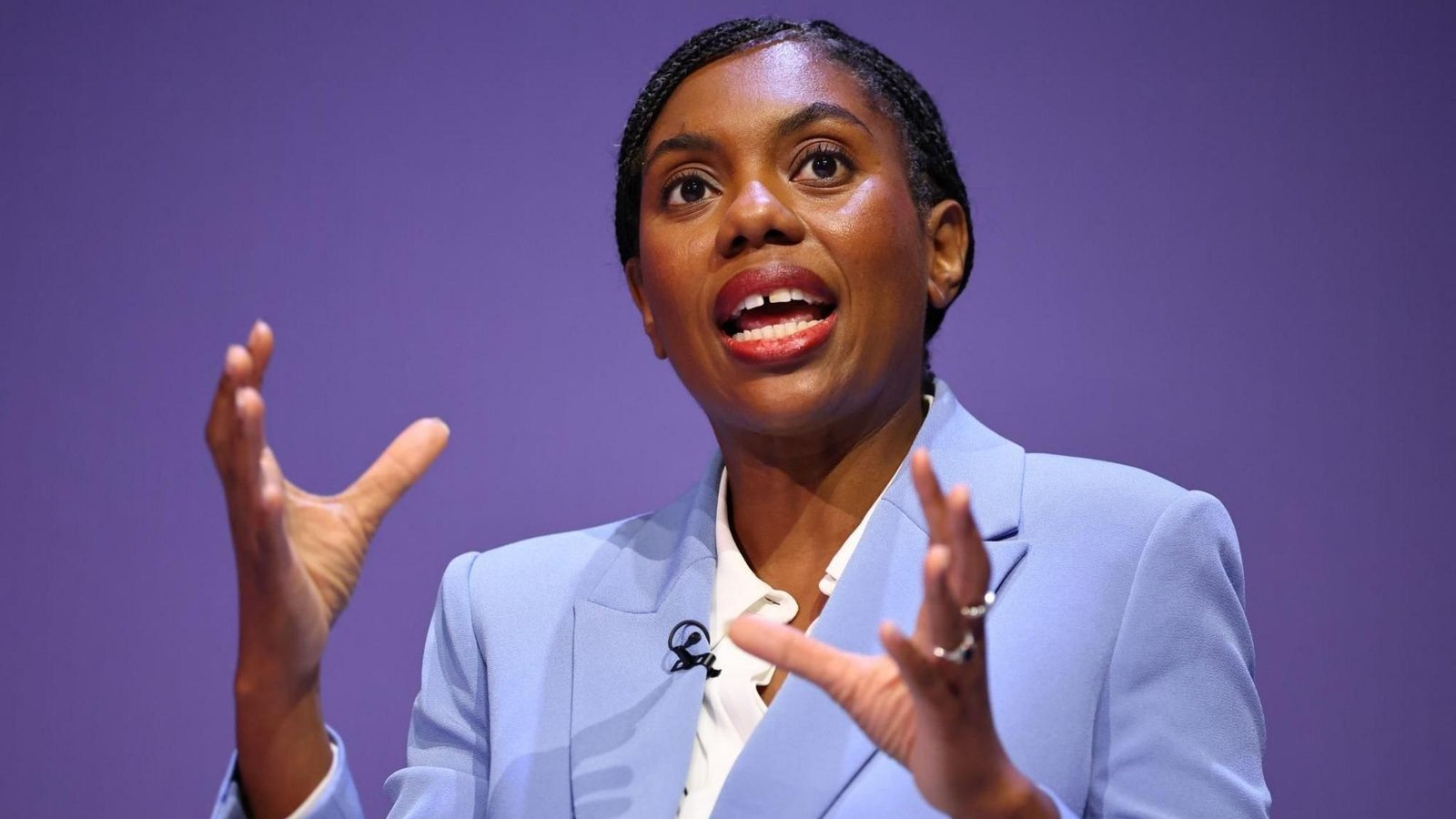
When people search for “Badenoch,” they are usually referring to Kemi Badenoch, one of the most prominent figures in contemporary British politics. Since becoming leader of the Conservative Party in November 2024, Badenoch has occupied a particularly important position in the United Kingdom’s political landscape as Leader of the Opposition.
Her political career has included senior government positions, including Secretary of State for Business and Trade and Minister for Women and Equalities. Today, her focus is broader: rebuilding the Conservative Party after its 2024 general election defeat, developing an alternative governing program, and competing for voters in an increasingly fragmented political environment.
For American readers, understanding Badenoch requires more than knowing her job title. Her political approach, background, policy positions, and relationship with the Conservative Party help explain why she has become such a consequential figure in British politics.
Who Is Kemi Badenoch?
Kemi Badenoch is a British Conservative politician and Member of Parliament for North West Essex. She has represented the area in Parliament since 2024, following her previous representation of the Saffron Walden constituency. UK Parliament lists her current roles as Leader of the Conservative Party and Leader of His Majesty’s Official Opposition.
Badenoch became Conservative Party leader on November 2, 2024. Her election followed the party’s heavy defeat in the 2024 general election, which left the Conservatives in opposition.
As opposition leader, her role is different from that of a government minister. She does not run government departments, but she leads the largest opposition party and is responsible for presenting an alternative political direction.
That makes her leadership particularly significant because the Conservative Party must simultaneously rebuild its electoral coalition and establish a credible alternative to the governing party.
Badenoch’s Political Career Before Conservative Leadership
Badenoch’s rise to Conservative leadership was preceded by several years of increasingly senior political responsibilities.
She entered Parliament in 2017 and subsequently held a range of ministerial positions. Her earlier responsibilities included work at the Department for Education, HM Treasury, the Department for Levelling Up, Housing and Communities, and the government’s equalities portfolio.
She later became Secretary of State for International Trade and President of the Board of Trade before becoming Secretary of State for Business and Trade in 2023. She remained in that role until the Conservatives left government following the 2024 general election.
This background is important because it gave Badenoch experience across several policy areas rather than limiting her political identity to one issue.
Her ministerial experience also helped establish the themes that have become associated with her leadership, including economic growth, business, regulation, individual responsibility, and cultural questions.
How Did Badenoch Become Conservative Party Leader?
The 2024 Conservative leadership contest followed the party’s general election defeat.
Badenoch ultimately defeated Robert Jenrick to become the new Conservative leader. Her victory placed her in charge of a party facing substantial electoral challenges.
The Conservatives had lost significant support across different parts of the electorate. Some traditional voters moved toward Reform UK, while others supported the Liberal Democrats or Labour.
Consequently, Badenoch inherited a difficult strategic problem: how could the Conservative Party rebuild support without simply becoming a copy of another political party?
Her leadership has therefore involved an ongoing attempt to define what modern Conservatism should look like.
What Does Badenoch Stand For?
Badenoch is generally associated with the right wing of the Conservative Party, although her political agenda covers a much wider range of subjects.
Several themes repeatedly appear in her political approach.
Economic Growth and Business
Economic growth has become a major part of Badenoch’s political message.
Her previous experience as Business and Trade Secretary gives this emphasis additional context. She has argued for policies intended to encourage investment, employment, entrepreneurship, and business activity.
For the Conservatives, economic policy is particularly important because the party traditionally presents itself as supportive of private enterprise and lower taxation.
The challenge is translating those principles into policies that voters see as practical rather than simply ideological.
Immigration and Borders
Immigration is another major issue associated with Badenoch’s political agenda.
The Conservative Party has historically emphasized stronger border controls, and Badenoch has continued to advocate a tougher approach to immigration.
The issue is politically complicated because Conservative voters do not all have identical priorities. Some want significantly lower immigration, while others place greater emphasis on the economic benefits of skilled migration.
Finding a balance between those competing concerns is therefore one of the challenges facing her leadership.
Welfare and Work
Badenoch has also placed considerable emphasis on work, welfare reform, and personal responsibility.
Her recent policy proposals have included measures intended to encourage employment among younger people and reduce what Conservatives describe as incentives for long-term welfare dependency.
At the same time, welfare policy can have significant social consequences. Any attempt to reduce benefits must therefore address questions surrounding disability, unemployment, household finances, and access to work.
That makes the issue one of the more politically sensitive parts of the Badenoch agenda.
Badenoch and the Conservative Party’s Future
One of Badenoch’s biggest challenges is rebuilding a Conservative Party capable of winning a future general election.
The task goes beyond increasing support among existing Conservative voters.
A successful opposition party generally needs to persuade people who previously voted for other parties, including undecided voters and former Conservative supporters who changed allegiance.
Badenoch therefore faces a strategic balancing act.
She needs to maintain the support of Conservative members while also making the party attractive to voters who may view the Conservatives as too divisive, too economically cautious, or insufficiently moderate.
Recent developments suggest the party is attempting to place greater emphasis on economic policy and preparation for a future election. In September 2026, the Conservatives announced changes to Badenoch’s Shadow Cabinet as part of a broader effort to prepare the party for the next general election.
Why Is Badenoch Important to American Readers?
British politics can sometimes appear confusing to American audiences because the parliamentary system operates differently from the U.S. political system.
The UK’s Leader of the Opposition is not directly equivalent to the leader of the minority party in Congress.
Instead, the opposition leader heads the principal political opposition in Parliament and is widely viewed as the government’s main political challenger.
This gives Badenoch an important platform. She regularly challenges government policy in Parliament, particularly during Prime Minister’s Questions, while her shadow ministers develop alternative policies in areas such as finance, defense, foreign affairs, health, education, and domestic security.
Her political positions can also matter internationally because Britain remains an important U.S. ally in defense, intelligence, trade, and diplomacy.
Badenoch, Brexit and Relations With Europe
Britain’s relationship with the European Union remains an important political dividing line.
Badenoch has generally taken a firm position on Brexit and has supported maintaining the UK’s ability to operate independently from EU institutions.
The issue presents a strategic challenge for the Conservative Party.
Some Conservative voters strongly support Brexit and want further separation from the European Union. Other voters, particularly in business communities and more moderate constituencies, may favor closer practical cooperation with European countries.
Badenoch therefore has to navigate a political environment in which Brexit continues to influence voting behavior years after the UK’s formal departure from the EU.
Badenoch and Defense Policy
Defense has also become increasingly prominent in Badenoch’s political messaging.
In October 2026, she promoted a Conservative proposal known as the “Britannia Shield,” designed around protecting critical British infrastructure from modern air threats. Badenoch subsequently rejected the characterization that the proposal was simply a British version of Israel’s Iron Dome.
The debate illustrates a broader change in European politics.
Defense spending, national security, cyber threats, military technology, and infrastructure protection have become increasingly important issues for governments across Europe.
For Badenoch, presenting the Conservatives as credible on national security is therefore likely to remain an important part of the party’s electoral strategy.
Economic Policy Is Central to Badenoch’s Strategy
Badenoch’s recent political messaging has increasingly emphasized taxes, growth, employment, and household finances.
For example, she has backed proposals aimed at reducing the financial burden on employers hiring younger workers. Recent Conservative proposals have also addressed childcare costs and tax thresholds.
The broader objective is straightforward: present the Conservatives as a party focused on economic growth and incentives to work.
However, economic promises also have to satisfy questions about affordability.
Opposition parties can propose significant changes, but voters and analysts inevitably ask how those measures would be funded and whether they would produce the promised economic effects.
That tension is likely to remain central to Badenoch’s political future.
What Challenges Does Badenoch Face?
Kemi Badenoch’s position is influential, but it is far from straightforward.
Winning Back Former Conservative Voters
The Conservatives lost support to several political competitors during the 2024 election.
Winning those voters back will require more than appealing to the party’s existing base.
Competing With Reform UK
Reform UK has created a significant challenge for the Conservatives, particularly among voters who favor tougher positions on immigration, Brexit, and national sovereignty.
Badenoch has attempted to compete for those voters while maintaining the Conservative Party as a distinct political organization.
She has also ruled out an alliance with Nigel Farage’s Reform UK, making the relationship between the two parties particularly important for the next election.
Appealing to Moderates
Another challenge is avoiding excessive alienation of centrist voters.
A strategy that succeeds in winning back voters from Reform UK could potentially make the Conservatives less attractive to moderate voters who previously supported the party.
That means Badenoch needs to find a coalition broad enough to win parliamentary seats across different parts of Britain.
Turning Personal Popularity Into Party Support
Recent reporting has suggested that Badenoch’s personal standing has improved compared with earlier periods of her leadership, while the Conservative Party still faces significant electoral difficulties.
This distinction matters.
A political leader can become more popular without automatically transforming the fortunes of their party.
For Badenoch, the crucial question is whether improved perceptions of her leadership can eventually translate into broader Conservative support.
What Could Badenoch’s Leadership Mean for the Next Election?
It is too early to know whether Badenoch will eventually lead the Conservatives back into government.
British elections can change dramatically as campaigns develop, and voter preferences can shift in response to economic conditions, government performance, international events, and political leadership.
Still, several factors will be important.
Badenoch will need to demonstrate that the Conservative Party has learned from its 2024 defeat. She will also need to offer voters a coherent economic program, maintain credibility on national security, and demonstrate that the party can appeal beyond its most committed supporters.
Perhaps most importantly, voters will need to understand what a Badenoch-led Conservative government would actually do differently.
A clear and credible governing program could become one of the defining features of her leadership.
Frequently Asked Questions About Badenoch
Who is Badenoch?
“Badenoch” generally refers to Kemi Badenoch, a British Conservative politician who has served as Leader of the Conservative Party since November 2024. She is also the Leader of His Majesty’s Official Opposition.
What constituency does Kemi Badenoch represent?
Kemi Badenoch represents North West Essex in the UK House of Commons. She has represented the constituency since the 2024 general election.
When did Kemi Badenoch become Conservative Party leader?
Badenoch became leader of the Conservative Party on November 2, 2024.
What government positions did Badenoch previously hold?
Before becoming Conservative leader, Badenoch served as Secretary of State for Business and Trade, Secretary of State for International Trade, President of the Board of Trade, and Minister for Women and Equalities, among other roles.
Is Badenoch the Prime Minister of the UK?
No. Badenoch is the Leader of the Opposition and Conservative Party leader. She is not the UK’s prime minister.
What political party does Kemi Badenoch lead?
She leads the Conservative Party, one of the UK’s major political parties.
What issues are associated with Badenoch?
Her political agenda has included economic growth, taxation, immigration, welfare reform, national security, Brexit, regulation, and cultural issues.
Does Badenoch support Brexit?
Badenoch has generally supported maintaining Britain’s independence from the European Union and has taken a firm position on Brexit-related issues.
Why is Kemi Badenoch significant in British politics?
As Conservative Party leader and Leader of the Opposition, Badenoch leads the UK’s principal opposition party and plays a major role in challenging the government and shaping the Conservative alternative.
Could Badenoch become Prime Minister?
Yes, it is possible, but it depends on future elections and whether the Conservative Party can win enough parliamentary seats to form a government. Her leadership does not guarantee a future election victory.
Conclusion
Kemi Badenoch has become one of the defining figures in Britain’s current political landscape. Her journey from a backbench MP to senior government minister and eventually Conservative Party leader reflects a rapid rise through British politics.
Her challenge now is considerably larger than winning a leadership contest. She must rebuild a party that suffered a major electoral setback, compete with Reform UK and the Liberal Democrats, appeal to traditional Conservative voters, and convince the wider electorate that her party is ready to govern again.
For anyone searching for information about Badenoch, the most useful way to understand her political significance is to look beyond individual headlines. Her leadership sits at the intersection of Britain’s debates over economic growth, immigration, Brexit, national security, welfare, taxation, and the future direction of conservatism.
Whether she ultimately leads the Conservatives back into government remains uncertain. What is clear is that her decisions will continue to shape the direction of one of Britain’s most important political parties.

1 Comment
Pingback: Henri Kagan: Career, Discoveries, Asymmetric Catalysis and Nobel Prize