

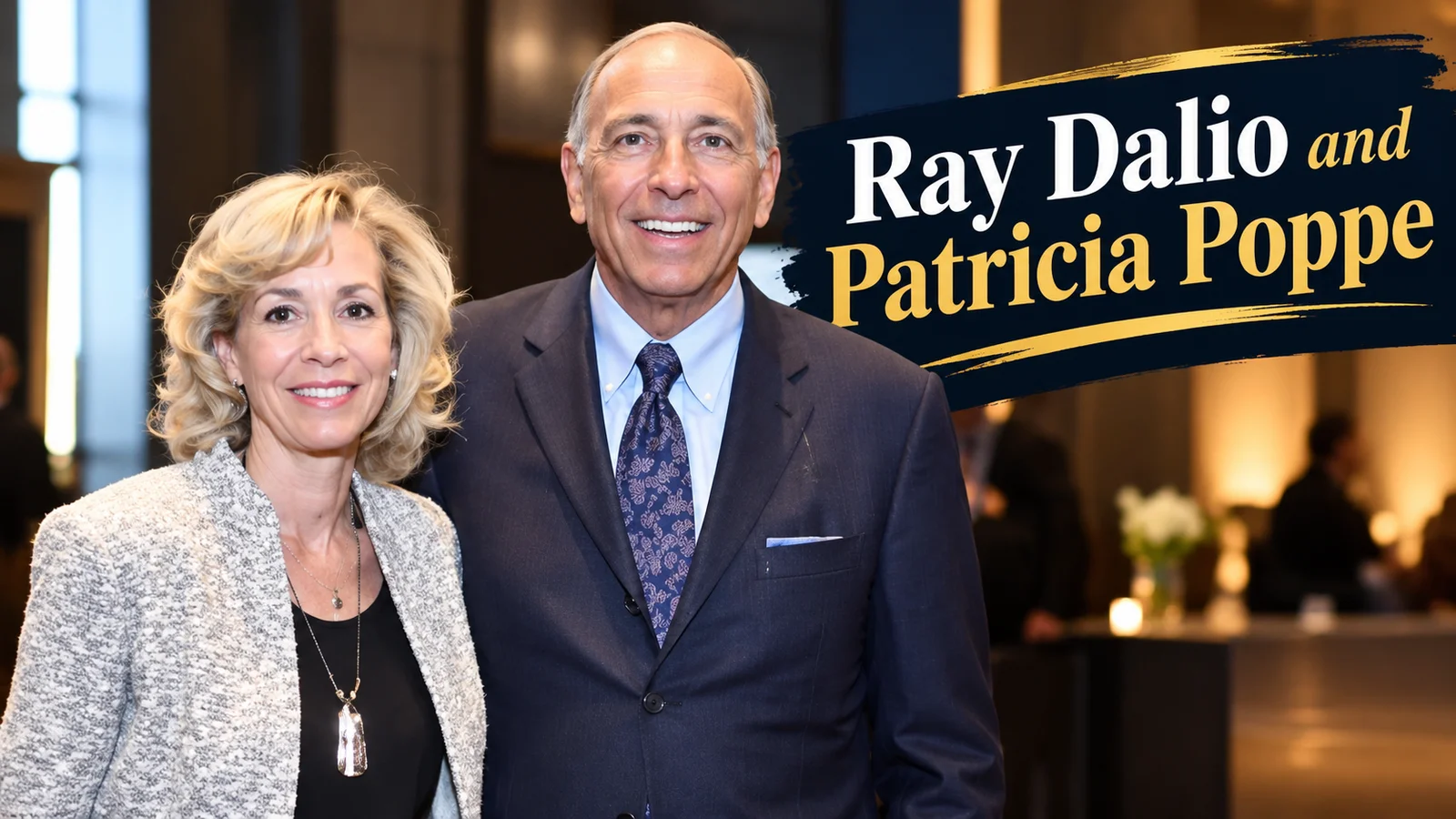
The American business landscape brings together influential leaders from industries that may appear completely unrelated. Investment management, energy production, infrastructure, and corporate strategy operate under different conditions, yet their decisions can influence one another in important ways. Ray Dalio and Patricia Poppe represent two distinct areas of this landscape, making their professional backgrounds an interesting subject for anyone following business leadership and economic developments in the United States.
Ray Dalio is widely recognized for founding Bridgewater Associates and developing investment principles that influenced institutional finance. Patricia Poppe, also known as Patti Poppe, is recognized for her leadership in the American energy sector, particularly through her position at PG&E Corporation.
Although their careers developed in different industries, the organizations associated with their names provide an opportunity to examine the relationship between investment capital and essential infrastructure. Understanding this distinction is important because a connection between two companies does not automatically establish a personal partnership between their leaders.
Their stories also illustrate how leadership, risk management, long-term planning, and organizational transformation shape different parts of the American economy.
Who Is Ray Dalio?
He started the investment firm from his two-bedroom apartment in New York City and gradually developed it into one of the world’s most influential hedge fund organizations. During his leadership, Bridgewater became known for its global macro investment approach, systematic research, and emphasis on understanding economic cycles.
Dalio’s professional influence extends beyond managing investments. His books and business philosophy have attracted readers interested in leadership, decision-making, organizational culture, and financial markets.
The Development of Bridgewater Associates
Bridgewater Associates began as a relatively small investment and advisory operation. Over time, it developed sophisticated research methods and investment strategies designed to understand how economies and financial markets behave.
The company became particularly associated with global macro investing, an approach that evaluates economic developments across countries and markets.
Factors commonly considered in this investment approach include:
- Interest rate movements and central bank policies.
- Inflation and changes in purchasing power.
- Government borrowing and fiscal policy.
- Currency fluctuations and international trade.
- Economic growth and employment trends.
- Geopolitical developments and market uncertainty.
One of Dalio’s best-known investment concepts is the All Weather strategy, which seeks to construct portfolios capable of performing across different economic environments.
Ray Dalio’s Approach to Leadership
Dalio is also known for emphasizing transparent communication, independent thinking, and systematic decision-making.
His book, Principles: Life & Work, explains how clearly defined principles can help individuals and organizations make better decisions.
Several ideas associated with his management philosophy include:
Learning from mistakes: Rather than treating mistakes as reasons to stop progressing, organizations can examine what went wrong and improve their processes.
Evidence-based decisions: Important business decisions should be supported by research, measurable information, and thoughtful discussion.
Long-term thinking: Sustainable success requires looking beyond immediate results and understanding the potential consequences of today’s decisions.
These principles have relevance across industries, including energy, manufacturing, technology, and financial services.
Dalio’s Role After Bridgewater’s Leadership Transition
An important distinction is that Ray Dalio no longer manages Bridgewater in the same way he did during its earlier development.
He stepped down as CEO in 2017, left his chief investment officer position in 2020, and relinquished his chairman position at the end of 2021. His subsequent involvement has focused on mentoring and sharing his investment and management philosophy.
His career therefore represents both the development of a major investment institution and the transition from founder-led management to organizational succession.Bridgewater+1
Who Is Patricia Poppe?
Patricia Poppe, widely known as Patti Poppe, is an American business executive recognized for her experience in manufacturing, energy operations, and utility management.
She became CEO of PG&E Corporation in January 2021. Her professional background includes leadership positions at General Motors, DTE Energy, and CMS Energy.
Her career is particularly interesting because it combines industrial operations with the challenges of managing essential energy infrastructure.
From Manufacturing to Energy Leadership
Poppe’s career began in the manufacturing industry, where she held several plant management positions at General Motors.
Working in manufacturing provides experience in operational efficiency, production planning, workplace safety, and managing complex teams. These skills can also be valuable in the energy industry, where reliable operations and infrastructure management are essential.
She later joined DTE Energy, where she served as a power plant director.
Her experience subsequently expanded through multiple leadership positions at CMS Energy and its principal subsidiary, Consumers Energy. She eventually became president and CEO of CMS Energy.
This progression gave her experience in several important areas:
- Energy generation and distribution.
- Customer service and operational performance.
- Infrastructure management.
- Regulatory and utility operations.
- Organizational transformation.
- Corporate strategy and executive leadership.
Leading PG&E Corporation
In January 2021, Poppe joined PG&E Corporation as its CEO.
The company operates in a challenging environment because electricity and natural gas services are essential to households, businesses, and public institutions.
Its responsibilities involve more than delivering energy. Infrastructure reliability, customer affordability, environmental considerations, wildfire prevention, and regulatory compliance are also major priorities.
Under Poppe’s leadership, PG&E has emphasized operational improvements, safety, efficiency, and customer experience.
The company’s long-term performance depends on its ability to maintain infrastructure, manage operational risks, and respond to changing energy requirements.
Poppe’s experience in manufacturing and utility operations provides a background relevant to these responsibilities.PG&E+1
What Connects Ray Dalio and Patricia Poppe?
The most interesting aspect of the keyword “Ray Dalio and Patricia Poppe” is the potential connection between investment management and the energy industry.
Their professional careers are separate, and publicly available information does not establish that they have a direct personal relationship, family connection, or business partnership.
However, Bridgewater Associates and PG&E Corporation have a documented institutional connection through investment disclosures.
Bridgewater Associates and PG&E Corporation
Bridgewater Associates has reported holdings in PG&E Corporation through its institutional investment disclosures.
A particularly notable example appeared in Bridgewater’s second-quarter 2026 Form 13F filing. The investment manager reported approximately 5.93 million PG&E shares as of June 30, 2026, with a reported quarter-end value of approximately $99.8 million.
This provides a measurable connection between the two organizations.
However, understanding the significance of this information requires separating three different things:
- Ray Dalio: The founder who established Bridgewater Associates and helped develop its investment philosophy.
- Bridgewater Associates: The institutional investment manager that reported the PG&E shareholding.
- Patricia Poppe: The executive leading PG&E Corporation.
The filing identifies Bridgewater’s reported investment position. It does not establish that Dalio personally purchased the shares, selected the investment, or communicated with Poppe about the company.
Likewise, an institutional investment does not automatically represent an endorsement of a company’s management.
Why the Institutional Connection Matters
Institutional investors frequently allocate capital to companies operating in essential industries.
Energy infrastructure is particularly important because electricity and natural gas support almost every part of modern economic activity.
Utilities must balance long-term infrastructure spending with customer affordability, operational reliability, regulatory requirements, and environmental responsibilities.
For investors, these characteristics make the energy sector an important area to evaluate.
The relationship between investment firms and utility companies therefore illustrates how financial markets interact with businesses responsible for essential services.nextdaily.co.uk+2
Investment Management and Energy Infrastructure: Two Different Leadership Challenges
Although Dalio and Poppe operate in different professional environments, their careers provide useful examples of two important business disciplines.
One involves managing financial uncertainty, while the other involves maintaining and transforming physical infrastructure.
Both require strategic thinking, effective management, and an understanding of risk.
Managing Financial Risk
Investment management involves making decisions under uncertain economic conditions.
An investment firm must consider the possibility that interest rates will change, inflation will accelerate, markets will decline, or geopolitical events will affect asset prices.
Dalio’s investment philosophy emphasizes understanding how different economic environments influence financial assets.
Diversification, risk assessment, and long-term economic analysis are central ideas in this approach.
For individual investors and business owners, the broader lesson is that financial decisions should account for multiple possible outcomes rather than relying on a single prediction.
Managing Operational Risk
Energy companies face a different set of challenges.
Their infrastructure must function consistently, often under difficult environmental and operational conditions.
For a utility company, operational risk can involve:
- Aging electrical equipment.
- Extreme weather events.
- Wildfire exposure.
- Infrastructure maintenance requirements.
- Changing electricity demand.
- Regulatory obligations.
- Customer service and affordability.
These challenges require investment in equipment, workforce development, technology, and long-term infrastructure planning.
Poppe’s executive responsibilities place these considerations at the center of corporate strategy.
Why Both Disciplines Need Long-Term Planning
Financial institutions and energy utilities operate on different timelines, but both benefit from understanding long-term consequences.
Investment managers evaluate how economic developments may affect portfolios over several years.
Utility companies must plan infrastructure improvements that may remain in service for decades.
In both environments, short-term performance cannot be the only measure of success.
A decision that improves immediate results but creates substantial future risks may ultimately damage an organization.
This is why effective leadership requires balancing present priorities with future responsibilities.
The Importance of Leadership in the American Business Environment
The careers of Ray Dalio and Patricia Poppe also highlight how leadership requirements change depending on the industry.
Building an Organization Around Clear Principles
Dalio’s experience at Bridgewater demonstrates the importance of developing a consistent organizational philosophy.
As companies grow, communication becomes more complicated, and decision-making involves more people.
Clear principles can help employees understand expectations, evaluate problems, and make decisions without relying entirely on senior executives.
This approach is particularly relevant to financial institutions, where investment decisions require extensive research and coordination.
Transforming an Established Organization
Poppe’s experience at PG&E highlights a different leadership challenge: improving an established company that provides essential services.
Transforming a utility requires attention to existing infrastructure, employee capabilities, customer expectations, and regulatory responsibilities.
Changes cannot be implemented without considering their potential effects on service reliability and public safety.
Successful organizational transformation therefore requires more than introducing new management ideas. It involves translating strategic objectives into measurable operational improvements.
Accountability and Public Trust
Trust is especially important in industries that influence people’s financial security and everyday lives.
Investment firms must maintain confidence among clients, institutional investors, and other stakeholders.
Energy utilities must demonstrate that they can provide dependable services while managing costs and safety responsibilities.
Both environments require accountability, although the specific standards and expectations differ.
For corporate leaders, maintaining trust is an ongoing responsibility rather than a one-time achievement.
What Business Professionals Can Learn From Their Careers
The professional journeys of Dalio and Poppe offer several useful lessons for entrepreneurs, executives, investors, and aspiring business leaders.
1. Build Expertise Before Pursuing Greater Responsibility
Both executives developed their careers through years of professional experience.
Dalio built his investment knowledge before growing Bridgewater into a major financial institution.
Poppe gained experience in manufacturing and energy operations before moving into senior executive leadership.
Their career paths illustrate why practical knowledge and industry experience matter when taking on increasingly complex responsibilities.
2. Understand the Risks Behind Every Major Decision
Risk management is not limited to financial markets.
A manufacturing company faces production risks, a utility faces infrastructure risks, and an investment firm faces market risks.
Business leaders should identify potential problems before they become major operational or financial challenges.
A practical approach includes assessing possible outcomes, evaluating available information, and developing contingency plans.
3. Make Long-Term Investments in Capabilities
Organizations need more than short-term financial results to remain competitive.
Investment in technology, employees, infrastructure, and research can help businesses adapt to changing market conditions.
For an energy utility, this might mean improving electrical infrastructure.
For an investment company, it could involve strengthening economic research and analytical systems.
For a small business, it may involve improving internal processes or developing employee skills.
4. Treat Organizational Culture as a Business Asset
A company’s culture influences how employees communicate, solve problems, and respond to challenges.
Leaders who encourage accountability and constructive feedback can create environments where problems are identified earlier.
This does not mean every organization should adopt the same management structure. The right approach depends on the company’s size, industry, responsibilities, and objectives.
5. Measure Progress With Meaningful Results
Leadership decisions should eventually produce measurable outcomes.
For an investment manager, relevant measures may include portfolio performance, risk exposure, and consistency across different market conditions.
For an energy company, measures may include service reliability, safety performance, operating efficiency, and customer experience.
Clear measurements help executives determine whether their strategies are delivering meaningful improvements.
The Broader Economic Relationship Between Finance and Energy
The connection between financial markets and energy infrastructure extends far beyond any individual investment.
Energy companies require substantial capital to maintain existing systems, modernize equipment, and respond to changing customer needs.
Institutional investors, meanwhile, evaluate companies based on their financial condition, business strategies, industry outlook, and potential risks.
This creates an important relationship between capital markets and infrastructure development.
Energy Demand and Infrastructure Investment
The United States continues to face evolving energy requirements.
Electric vehicles, data centers, industrial development, population growth, and digital infrastructure all influence electricity demand.
Meeting these requirements involves careful planning and substantial investment.
Utility companies must consider how to expand capacity while maintaining reliable service and managing costs.
Investors evaluating the energy sector must also consider regulatory developments, infrastructure spending, financing requirements, and long-term demand.
These considerations demonstrate why the financial and energy industries are closely connected, even when their executives have no direct professional relationship.
The Role of Institutional Investors
Institutional investors can influence capital allocation across major industries through their investment decisions.
Their holdings may include companies involved in technology, healthcare, manufacturing, transportation, and energy.
However, an investment position should be interpreted carefully.
A reported shareholding does not necessarily mean an investor controls the company, agrees with every management decision, or has a direct relationship with its executives.
The distinction is particularly important when discussing Bridgewater Associates, Ray Dalio, PG&E Corporation, and Patricia Poppe.
Understanding the difference between institutional investment activity and personal business relationships helps readers evaluate financial news more accurately.
Are Ray Dalio and Patricia Poppe Connected Through a Business Partnership?
There is no established public evidence confirming a direct business partnership between Ray Dalio and Patricia Poppe.
Their strongest identifiable professional overlap is institutional rather than personal: Bridgewater Associates has reported an investment position in PG&E Corporation, where Poppe serves as CEO.
This distinction provides a more accurate understanding of why the two names may appear together in business discussions.
It also demonstrates the importance of evaluating corporate disclosures rather than assuming that two prominent executives have worked together simply because their associated organizations share a financial connection.
Frequently Asked Questions
1. Who is Ray Dalio?
Ray Dalio is an American investor, entrepreneur, and author who founded Bridgewater Associates in 1975. He is known for global macro investing, risk management, economic research, and his book Principles: Life & Work.
2. Who is Patricia Poppe?
Patricia Poppe, also known as Patti Poppe, is an American business executive who became CEO of PG&E Corporation in January 2021. She previously held leadership positions at CMS Energy, Consumers Energy, DTE Energy, and General Motors.
3. Are Ray Dalio and Patricia Poppe business partners?
No publicly verified information establishes a direct business partnership between them. Their professional backgrounds are different, and the documented connection involves Bridgewater Associates’ reported investment in PG&E Corporation.
4. What is the connection between Bridgewater Associates and PG&E?
Bridgewater Associates has reported ownership of PG&E Corporation shares through institutional investment disclosures. These filings document a financial position held by the investment manager, not necessarily a personal investment by Ray Dalio.
5. Does Ray Dalio own Bridgewater Associates?
Ray Dalio founded Bridgewater but transitioned away from its executive leadership over several years. He relinquished his remaining ownership interest by 2025, according to publicly reported information.
6. What is Patricia Poppe known for?
Patricia Poppe is known for her leadership in the American energy industry, her operational experience, and her work as CEO of PG&E Corporation. Her career includes substantial experience in manufacturing and utility management.
7. What does Bridgewater Associates do?
Bridgewater Associates is an investment management firm known for global macro investing, economic research, and systematic investment strategies. It was established by Ray Dalio in 1975.
8. Why is PG&E Corporation important?
PG&E Corporation is an American energy holding company responsible for providing essential energy services through its utility operations in Northern and Central California. Its business involves infrastructure reliability, energy delivery, safety, and customer service.
9. What leadership lessons can be learned from Ray Dalio and Patricia Poppe?
Their careers highlight the importance of industry knowledge, disciplined decision-making, risk management, organizational accountability, and long-term strategic planning. They also demonstrate that effective leadership can take different forms depending on business responsibilities.
10. Why are investment management and the energy industry connected?
Energy companies need significant capital to maintain infrastructure and support future demand. Investment firms evaluate these companies as potential investment opportunities, creating a financial relationship between capital markets and the energy sector.
Conclusion
Ray Dalio and Patricia Poppe represent two important areas of the American business environment: institutional investment management and energy infrastructure leadership.
Dalio’s career demonstrates the influence of economic research, systematic investment strategies, and organizational principles through the development of Bridgewater Associates. Poppe’s professional journey illustrates the importance of operational expertise, infrastructure management, and corporate transformation in the utility industry.
Although no direct personal or professional partnership between the two has been publicly established, Bridgewater Associates’ reported investment in PG&E Corporation provides a meaningful institutional connection.
Their respective careers offer valuable perspectives on risk management, long-term planning, organizational accountability, and business leadership. For readers interested in American finance and energy, understanding both individuals provides a broader view of how investment decisions and essential infrastructure intersect in the modern economy.

1 Comment
Pingback: Kathleen Yamachi: The Story of Pat Morita’s First Wife and Her Life Away From Fame