

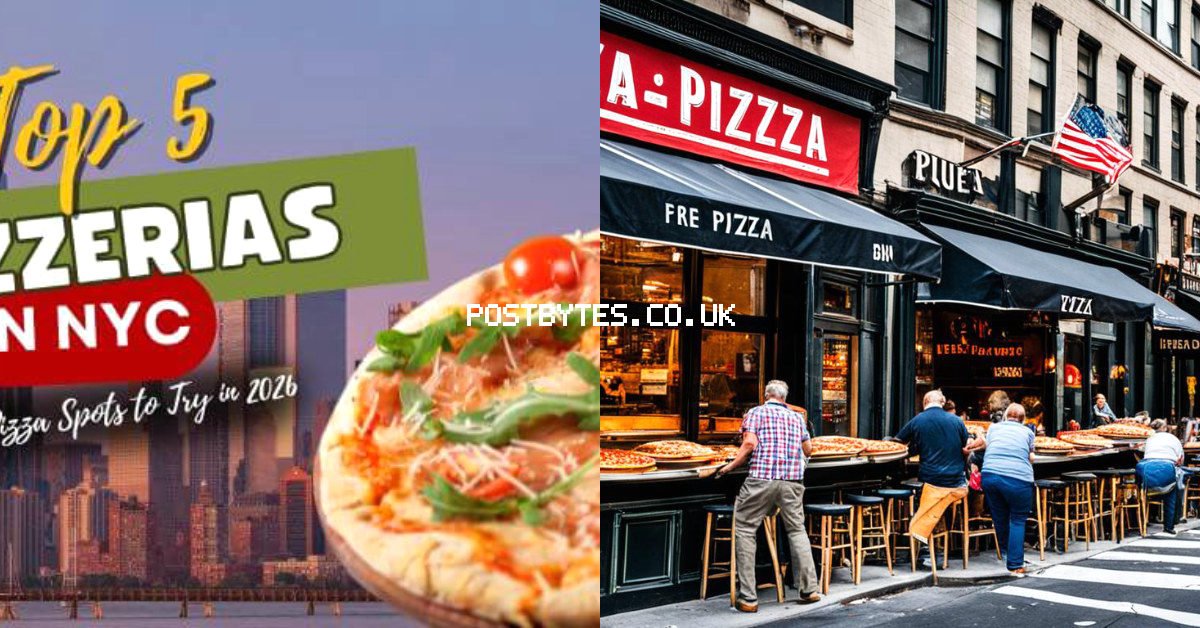
Most visitors to New York City expect pizza to be good, but the gap between a decent slice and a legendary one is wider than the Hudson. The top 5 pizzerias in NYC are not just restaurants; they are institutions with decades of history, distinct techniques, and fiercely loyal followings. This guide breaks down what makes each of these five spots essential, from the coal-fired ovens of Manhattan to the cash-only counters of Brooklyn.
How These Five Pizzerias Define New York’s Regional Pizza Identity
New York pizza is often described as a regional style, but the five most celebrated pizzerias each represent a different facet of that identity. Lombardi’s, which opened in 1905 in Manhattan, is widely considered America’s first pizzeria and still uses a coal oven and fresh mozzarella, a method many regard as the city’s original pizza tradition. Joe’s Pizza, established in Greenwich Village in 1975, focuses on the classic New York slice—thin, crisp, and foldable—that has become the standard for street-corner pizzerias across the boroughs.
Di Fara Pizza in Brooklyn, founded by Domenico DeMarco in 1964, takes a more labor-intensive approach. DeMarco, who died in 2022, was known for hand-cutting fresh basil and using a blend of imported cheeses; his son now runs the shop, preserving the recipes. Patsy’s Pizzeria, which began in East Harlem in 1933, is another coal-oven pioneer, though it closed its Bronx location in 2021 and now focuses on Manhattan. Lucali, the youngest of the group, opened in Carroll Gardens, Brooklyn, in 2006, offering a limited, cash-only menu that has earned it a cult following.
These five are frequently cited in Eater, Time Out, and Thrillist rankings as the definitive top tier of New York pizza. Their regional relevance extends beyond mere taste; they anchor neighborhoods, draw tourists, and shape local food culture. For example, Lucali’s popularity has turned a quiet block in Carroll Gardens into a nightly queue of pizza pilgrims, while Joe’s remains a Greenwich Village landmark that locals and celebrities alike frequent.
The Economics of Iconic Pizzerias: Pricing, Cash-Only Policies, and Market Pressures
Running a top-tier pizzeria in New York City involves significant financial challenges, and the five establishments handle them in different ways. Lucali is famously cash-only, a policy that simplifies transactions but also reflects its no-frills ethos. The menu is limited—pizza, calzone, and a few sides—which keeps costs down and quality high. In contrast, Lombardi’s and Patsy’s have embraced modern payment methods while maintaining their historic ovens, which require constant maintenance and fuel costs. You may also want to check Things to Do in Myrtle Beach: Top Attractions and Hidden Gems for a different perspective on similar ground
The financial landscape shifted in 2024 when a former chef from Peter Luger’s steakhouse opened a new pizzeria, signaling that the market remains competitive. However, Lucali and Joe’s have retained their top rankings, suggesting that brand loyalty and consistent quality outweigh novelty. The economic model of these pizzerias often relies on high volume and low margins, especially for slice shops like Joe’s, which sells thousands of slices daily. Di Fara, on the other hand, operates on a slower, more artisanal basis, with pies priced higher to reflect the premium ingredients and labor.
Regulatory pressures also play a role. New York City’s health department inspections, minimum wage laws, and zoning restrictions affect all food businesses, but historic pizzerias face additional challenges. For instance, maintaining a coal-fired oven requires compliance with emissions regulations, which can be costly. Patsy’s decision to close its Bronx location in 2021 was partly attributed to such operational difficulties, though the Manhattan branch continues to thrive.
A Timeline of Key Moments in New York’s Pizza History
The story of these five pizzerias is a timeline of New York’s pizza evolution. Lombardi’s opened in 1905, introducing the coal-oven style that would define the city’s early pizza. In 1933, Patsy’s followed in East Harlem, also using a coal oven, and became known for its thin, crisp crust. Joe’s arrived in 1975, during a period when the slice was becoming the city’s fast food of choice. Di Fara began in 1964, but it was in the 1990s that Domenico DeMarco’s meticulous methods gained national attention, earning him the nickname ‘The Godfather of Pizza.’ Public records covering this story are gathered in Top 5 Pizzerias in NYC: Best Pizza Spots to Try in 2026
Lucali’s opening in 2006 marked a shift toward a more minimalist, high-quality approach, with Mark Iacono, a former lawyer, turning a former candy store into a pizzeria that now rivals century-old institutions. The New York Times has repeatedly named Lucali and Joe’s among the city’s best in its annual pizza lists, cementing their status. In 2022, DeMarco’s death was a significant moment, but his son’s continuation of the recipes ensured Di Fara’s legacy. The 2024 opening of a pizzeria by a former Peter Luger chef added a new chapter, though it has not yet displaced the established top five.
What Experts and Insiders Say About the Top Five
Pizza critics and industry insiders offer nuanced perspectives on why these five stand out. According to some sources, the key differentiator is the dough—each pizzeria uses a unique fermentation process that affects texture and flavor. For example, Lucali’s dough is made fresh daily and hand-stretched, resulting in a chewy, slightly charred crust. Joe’s, by contrast, uses a high-gluten flour that yields a crispier slice, ideal for folding.
Chefs who have worked at these establishments note that consistency is the hardest part. One insider, who asked not to be named, said that maintaining the same quality across decades requires obsessive attention to detail, from the temperature of the oven to the sourcing of tomatoes. The New York Times food critic Pete Wells has praised Lombardi’s for its ‘pristine’ margherita, while Eater editors have highlighted Di Fara’s ‘uncompromising’ approach. The weaker claim here is that any single pizzeria is ‘the best’—the reality is that each excels in a specific style, and the top five represent the spectrum of New York pizza rather than a hierarchy.
Frequently Asked Questions
How many pizzerias are typically considered the best in NYC?
Most lists, including those from Eater and Time Out, feature five to ten pizzerias, but the top five are consistently Lombardi’s, Joe’s, Di Fara, Lucali, and Patsy’s. These five are often cited as the definitive tier due to their historical significance and consistent quality.
How does Lucali differ from Joe’s Pizza?
Lucali offers a limited, cash-only menu with a focus on whole pies, while Joe’s is a classic slice shop that sells by the slice. Lucali’s crust is chewier and more artisanal, whereas Joe’s is thin and crisp, designed for folding. Both are highly rated but cater to different pizza experiences.
Where was the first pizzeria in the United States located?
Lombardi’s, which opened in 1905 in Manhattan’s Little Italy, is widely considered America’s first pizzeria. It originally operated on Spring Street and later moved to its current location on Mott Street, still using a coal oven.
Who is the current owner of Di Fara Pizza?
After Domenico DeMarco’s death in 2022, his son, who had worked alongside him for years, took over the Brooklyn shop. He continues to use the same recipes and techniques, ensuring the pizzeria’s legacy endures.
What is the signature style of Patsy’s Pizzeria?
Patsy’s is known for its coal-fired, thin-crust pies, a style that originated in New York in the early 20th century. The crust is charred and crisp, with a simple topping of fresh mozzarella and San Marzano tomatoes, reflecting the classic Neapolitan influence.
