

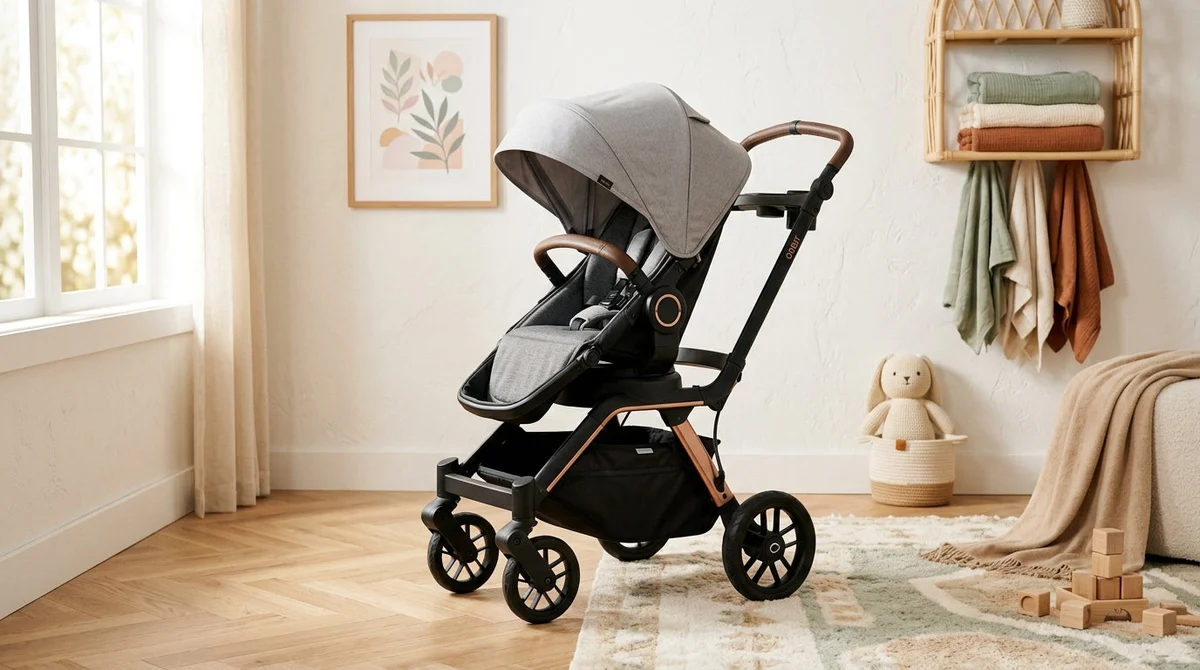
How to Choose a Baby Stroller is one of the most important decisions you will make as a new or expecting parent. A stroller is far more than just a piece of baby gear—it is an essential daily tool that impacts your baby’s safety, your physical comfort, and your freedom to travel.
With hundreds of models available—ranging from ultra-compact umbrella strollers to heavy-duty all-terrain travel systems—finding the perfect fit can quickly feel overwhelming. This comprehensive, expert-backed guide breaks down everything you need to know to choose the best baby stroller for your budget, lifestyle, and growing family.
Quick Guide: Types of Baby Strollers Compared
Before diving into specific features, it is helpful to understand the main categories of strollers available on the market today:
| Stroller Type | Best Suited For | Key Pros | Potential Cons |
| Full-Sized / Standard | Everyday suburban or urban use | Durable, spacious storage, full recline features | Bulkier, heavier to lift into car trunks |
| Lightweight / Umbrella | Travel, quick errands, public transit | Ultra-portable, lightweight (under 15 lbs), easy to fold | Minimal storage space, smaller wheels, less padding |
| Travel Systems | Newborns & frequent car commuters | Seamless transition from car to stroller without waking baby | High initial cost, can be heavy once baby grows |
| Jogging Strollers | Active parents & rough trails | Air-filled tires, unmatched shock absorption, smooth push | Large footprint, non-compact fold, heavier |
| Double / Convertible | Twins or growing families with siblings | Accommodates two kids at once (Tandem or Side-by-Side) | Wider or longer, harder to maneuver through doorways |
7 Critical Factors to Consider Before Buying
1. Mandatory Safety Features
Safety is non-negotiable when it comes to your How to Choose a Baby Stroller infant. Always verify that a stroller meets international safety certifications (such as ASTM F833 in the US or EN 1888 in Europe).
Safety Checklist:
- 5-Point Harness: Ensures your baby is securely strapped around the shoulders, waist, and between the legs.
- One-Touch Brakes: Easily accessible foot pedal brakes that lock both rear wheels instantly.
- Pinch-Free Hinges: Prevents little fingers from getting caught during unfolding and folding.
- Stable Base: Low center of gravity to prevent the stroller from tipping over when bags are hung on handles.
2. Newborn Compatibility vs. Toddler Use
Newborns (0–6 months) cannot support their own heads and must lie completely flat. If you plan to use a stroller from day one, make sure it offers:
- A bassinet attachment.
- An infant car seat adapter.
- A seat that fully reclines to a flat position ($180^\circ$).
Once your child reaches 6+ months, you can transition to upright, forward-facing seating with adjustable leg rests.
3. Size, Weight, and Foldability
Always measure your vehicle’s trunk space and entryway storage before making a purchase! Ask yourself:
- Can I lift this stroller with one hand while holding my baby in the other?
- Does it feature a one-hand, self-standing fold mechanisms?
If you live in a walk-up apartment or rely on public transportation, prioritize a lightweight model weighing under 18 pounds (8 kg).
4. Wheel Design and Terrain Performance
The smooth quality of your ride depends entirely on the stroller’s wheel construction:
- Plastic/EVA Foam Wheels: Lightweight and maintenance-free. Ideal for paved city sidewalks and indoor shopping malls.
- Air-Filled (Pneumatic) Rubber Tires: Offer superior grip and shock absorption on gravel, dirt paths, snow, and uneven cobblestones.
- All-Wheel Suspension: Absorbs bumps so your sleeping child stays undisturbed over rough terrain.
5. Storage Space and Basket Capacity
A spacious under-seat basket is essential for parents on the go. Look for baskets rated to hold at least 10–15 lbs of gear, with easy front or rear access even when the seat is fully reclined.
6. Canopy Protection & Weather Covers
Look for an extendable canopy rated UPF 50+ to shield your child from harmful UV rays. A canopy with a magnetic “peek-a-boo” window allows you to check on your child quietly without stopping.
7. Handlebar Adjustability
If parents or caregivers differ significantly in How to Choose a Baby Stroller height, look for a stroller with a telescopic or rotating adjustable handlebar. Pushing a stroller at an awkward angle causes unnecessary wrist, shoulder, and back strain.
Decision Matrix: Which Stroller Matches Your Lifestyle?
- The Urban Commuter: Choose a lightweight, narrow-frame stroller with swivel wheels and an easy one-hand fold for buses and subways.
- The Fitness Enthusiast: Invest in a dedicated jogging stroller with a locking front wheel, handbrake, and air-filled tires.
- The Suburban Explorer: A full-sized standard stroller or travel system with a large storage basket for groceries and park visits is ideal.
- The Jet-Setter Family: Look for an ultra-compact cabin-approved travel stroller that fits inside airplane overhead compartments.
Practical Checklist: How to Test Drive a Stroller in Store
Before buying, test your shortlisted models in person using this quick 5-minute evaluation:
- The One-Hand Push Test: Try steering the stroller using only one hand around tight store aisles.
- The Fold & Lift Test: Fold the stroller down, carry it for 10 feet, and unfold it again to ensure it isn’t overly complicated.
- The Brake Engagement: Step on the brake pedal while wearing everyday shoes to see if it engages and releases effortlessly.
- Basket Accessibility: Place a filled diaper bag into the under-seat basket to test its capacity and access clearance.
Frequently Asked Questions (FAQs)
Do I really need a Travel System, or can I buy items separately?
A travel system offers unmatched convenience for the first year because you can click an infant car seat directly onto the stroller frame without waking a sleeping baby. However, if you rarely travel by car, buying a standalone stroller with a bassinet attachment may save money.
How long will my child use a stroller?
Most standard strollers accommodate children from birth up to 45–50 lbs (around 4 to 5 years of age). Many toddlers start walking independently around age 3, but strollers remain essential for long daytime outings and vacations.
How do I keep my stroller clean?
Wipe down aluminum and plastic frames with How to Choose a Baby Stroller warm water and mild dish soap. Most stroller seat fabrics are water-resistant and spot-cleanable, while higher-end models feature machine-washable, removable seat covers.
Conclusion: Making the Right Investment
Selecting the best baby stroller comes down to balancing your daily routine, long-term plans, and personal budget. Rather than simply buying the most expensive or trending model, focus on the features that will simplify your everyday family life.
